Non-Planar 3D Concrete
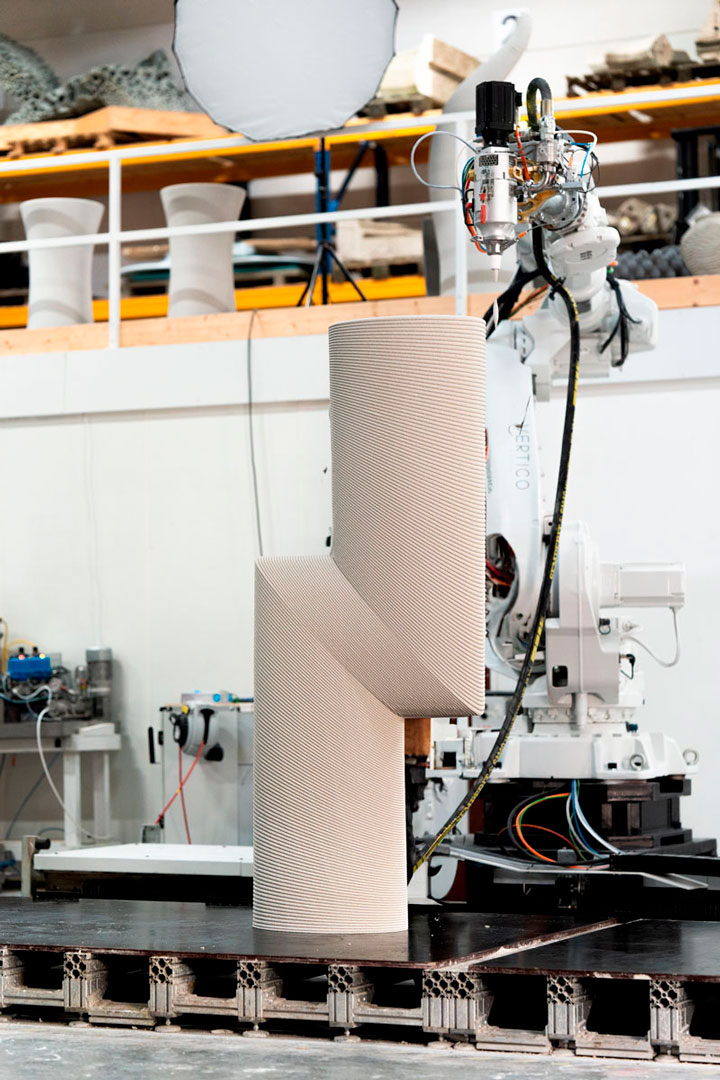
This project tested whether robotic 3D concrete printing can turn a sharp 90-degree angle and then turn back again. The aim was to go beyond traditional planar, layer-by-layer fabrication.
Instead of using support material or post-processing, the goal was to see whether geometry alone, combined with precise control of the printing process, could handle extreme changes in direction.
Non-planar printing in practice
Using non-planar printing paths, we printed a sharp 90° angle without any additional support.
The toolpath adapted continuously to the geometry. This let the printer keep surface quality, dimensional accuracy and structural stability through the whole transition.
The experiment shows how non-planar printing makes complex overhangs and changes of direction possible that planar approaches cannot achieve, while keeping the process efficient and economical with material. Related tests on layer height are described in the wide nozzle printing project.
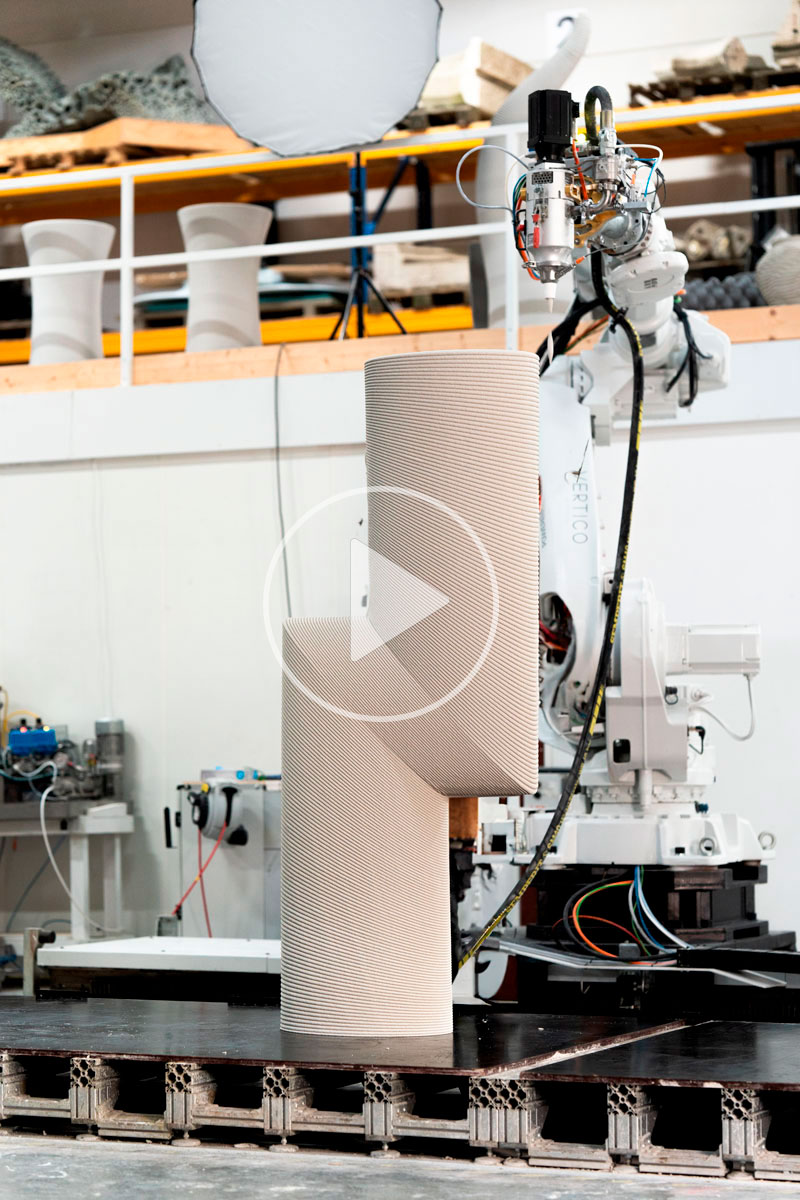
Expanding design freedom in concrete
Beyond its visual effect, the project is an important step toward more design freedom in robotic 3D concrete printing for architecture and construction.
Printing sharp angles and changes of direction reliably opens up expressive forms, optimized structures and integrated architectural details, all produced directly by the printing process. The non-planar firepit is another example of this approach.


Dive into the new era of design with Vertico
Discover Vertico's state-of-the-art concrete 3D printing solutions that turn visionary ideas into reality.