Modern Renaissance: Robotic Milling of 3D Printed Concrete
.jpeg)
A Hybrid Approach to Digital Craftsmanship
At Vertico, we are pushing 3D concrete printing beyond extrusion alone by integrating robotic milling as a post-processing and in-process technique. This hybrid workflow combines the efficiency of additive manufacturing with the precision of subtractive fabrication, opening up a new chapter in digital concrete construction.
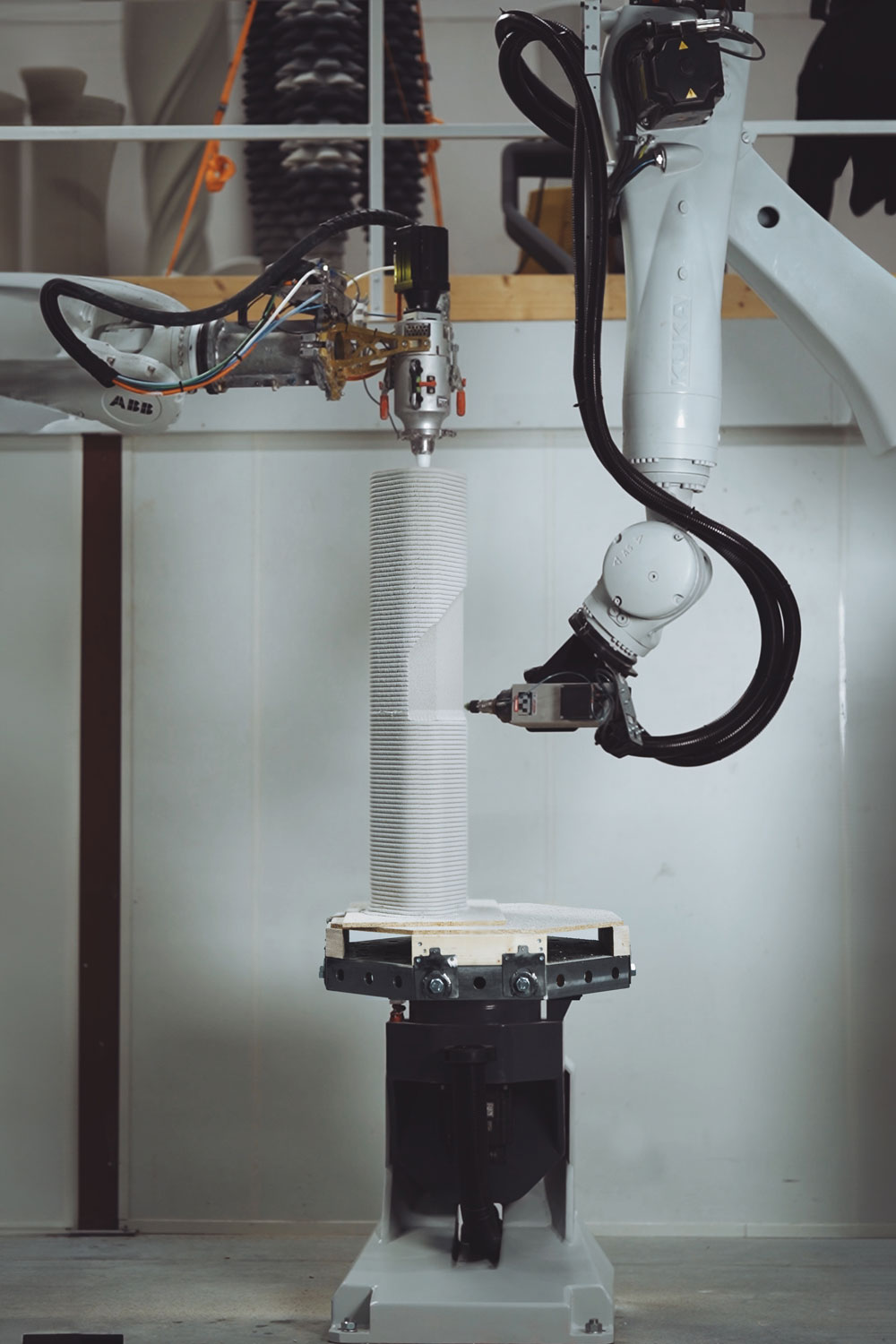
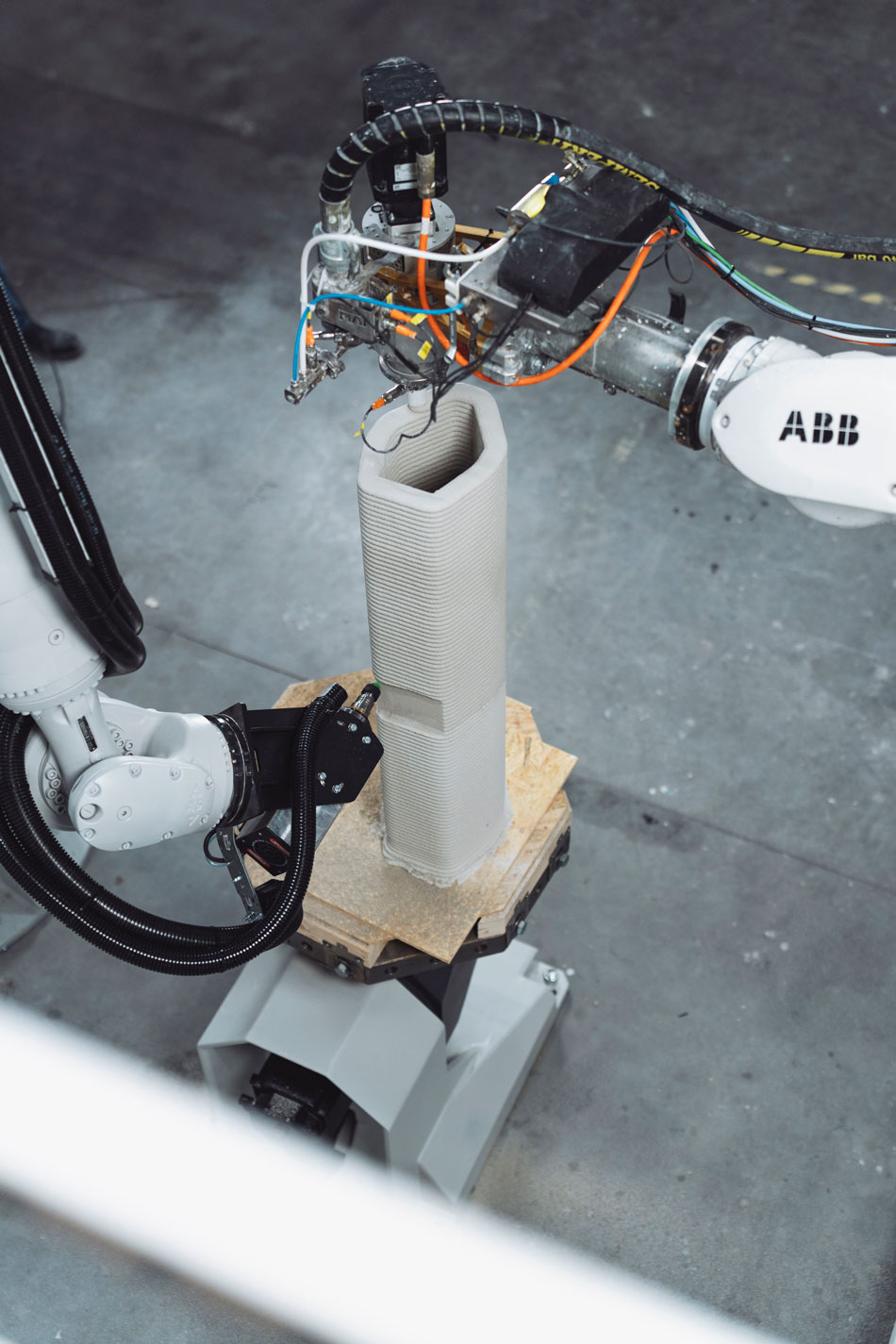
Much like a craftsman shaping material with two hands, our process allows two robots to work on a single object simultaneously. One robot prints the concrete geometry layer by layer, while the second robot mills the surface, refining form, sharpening edges, and introducing detail that would otherwise be impossible to achieve through extrusion alone.
Two Robots, One Object
In this research setup, an ABB robot is responsible for printing, while a KUKA robot performs milling operations. The coordination between the two systems is critical. Milling takes place at a carefully chosen moment in the material’s curing process—when the concrete is strong enough to hold its shape, yet still soft enough to be precisely sculpted.
This timing allows us to:
- Achieve surface resolutions beyond the limits of nozzle size
- Create crisp edges and fine ornamental detail
- Produce smooth finishes and controlled textures
- Mill accurate joints and modular connections with millimeter precision
As environmental conditions change, so does the process. During warmer periods, faster drying times require continuous adjustment of milling speed, depth, and tool paths. This ongoing calibration is a key part of the research, ensuring consistent surface quality under varying conditions.
Exploring Pattern, Texture, and Geometry
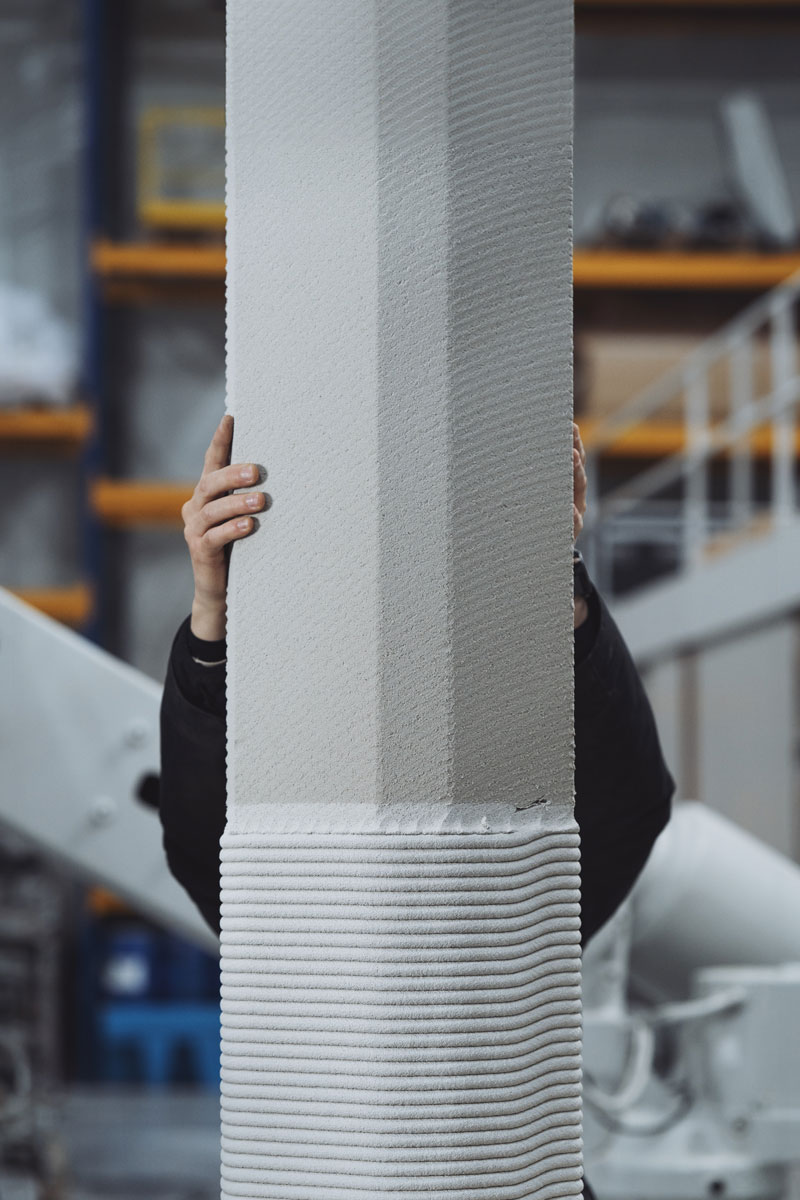
To test the full potential of robotic milling, Vertico produced a research column featuring multiple surface patterns. Each segment explores a different milling strategy—from subtle textures to pronounced grooves—demonstrating how milling can dramatically expand the architectural language of printed concrete.
These experiments allow us to study:
- Toolpath behavior across curved and non-planar surfaces
- Material response during early-stage milling
- The relationship between printed geometry and milled detail
The result is a workflow that bridges the gap between rough printed formwork and finely crafted architectural elements.
From Contemporary Forms to Historic Architecture
Building on these findings, we are now applying this hybrid method to the reproduction of historic Gothic architectural elements, including research connected to Utrecht’s Dom Tower. This marks a significant shift—from modern, smooth geometries to highly detailed, ornamented forms rooted in traditional craftsmanship.
Replicating historic elements introduces new challenges: complex profiles, layered depth, and intricate detailing. Robotic milling allows us to reinterpret these elements digitally, preserving their character while enabling parametric control and structural optimization.
Shaping the Future of Concrete Fabrication
By combining 3D concrete printing and robotic milling, Vertico is redefining what is possible with digital concrete fabrication. This research holds strong potential for architecture, heritage restoration, and advanced design, where precision, scalability, and craftsmanship must coexist.
As development continues, additional components—including a synchronized turntable—will further expand the degrees of freedom within this process. Each experiment brings new insights, and each insight pushes the technology closer to applications that merge history, innovation, and architectural expression.


.jpg)
.jpg)
j.jpg)
Dive Into the new era of design with Vertico
Discover Vertico's state-of-the-art concrete 3D printing solutions that turn visionary ideas into reality.