3D-printed hexastone pavilion with structural efficiency
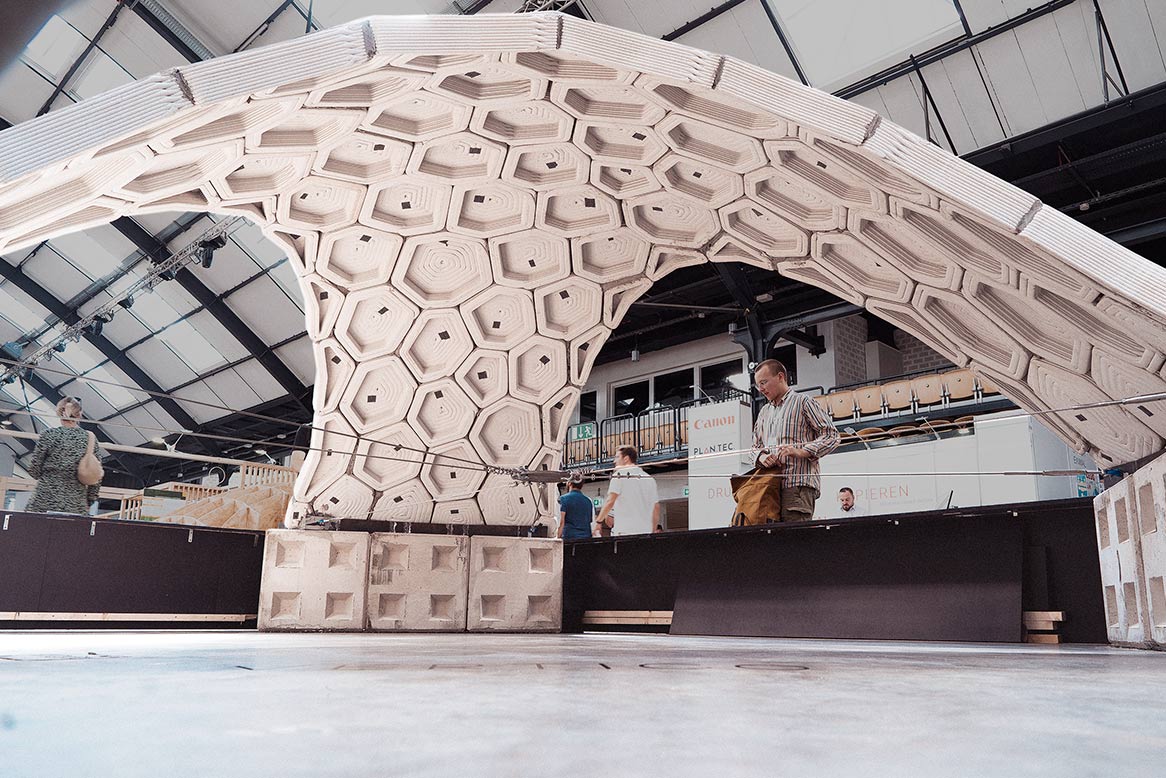
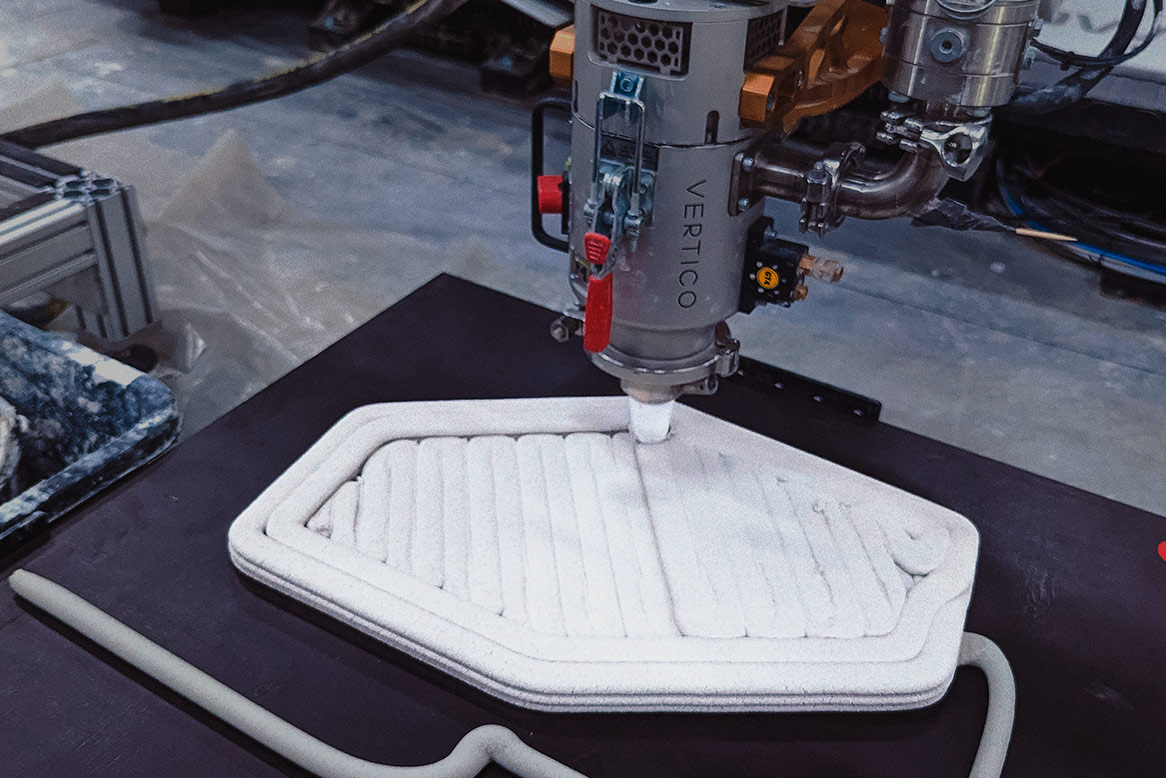
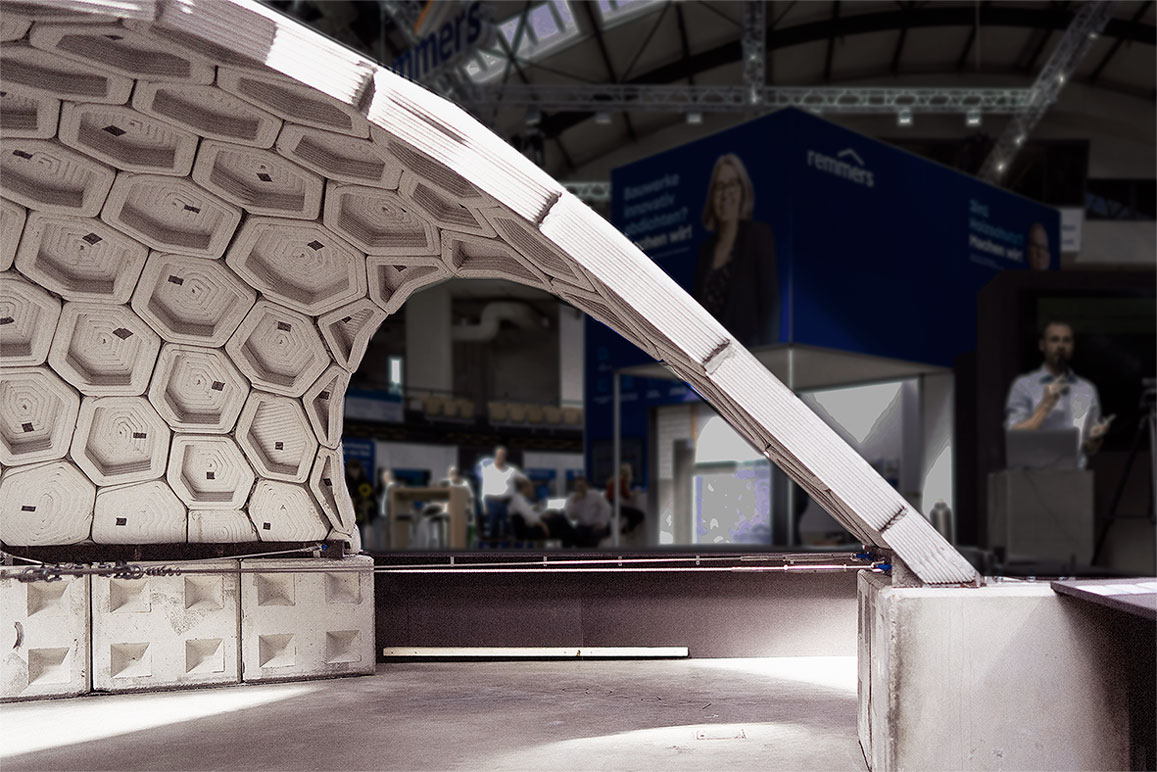
Hexastone is a compression-only pavilion built from 102 interlocking stones, each one 3D printed in concrete by Vertico. It was developed in Germany and the Netherlands with Prof. Herrmann and Prof. Spaeth of Technische Hochschule Lübeck and with Sika. The project pairs old structural principles with digital production to rethink how we build with materials.
From digital design to printed stones
The overall shape came from a computational form-finding process based on structural simulations. That process produced a shell that works only in compression.
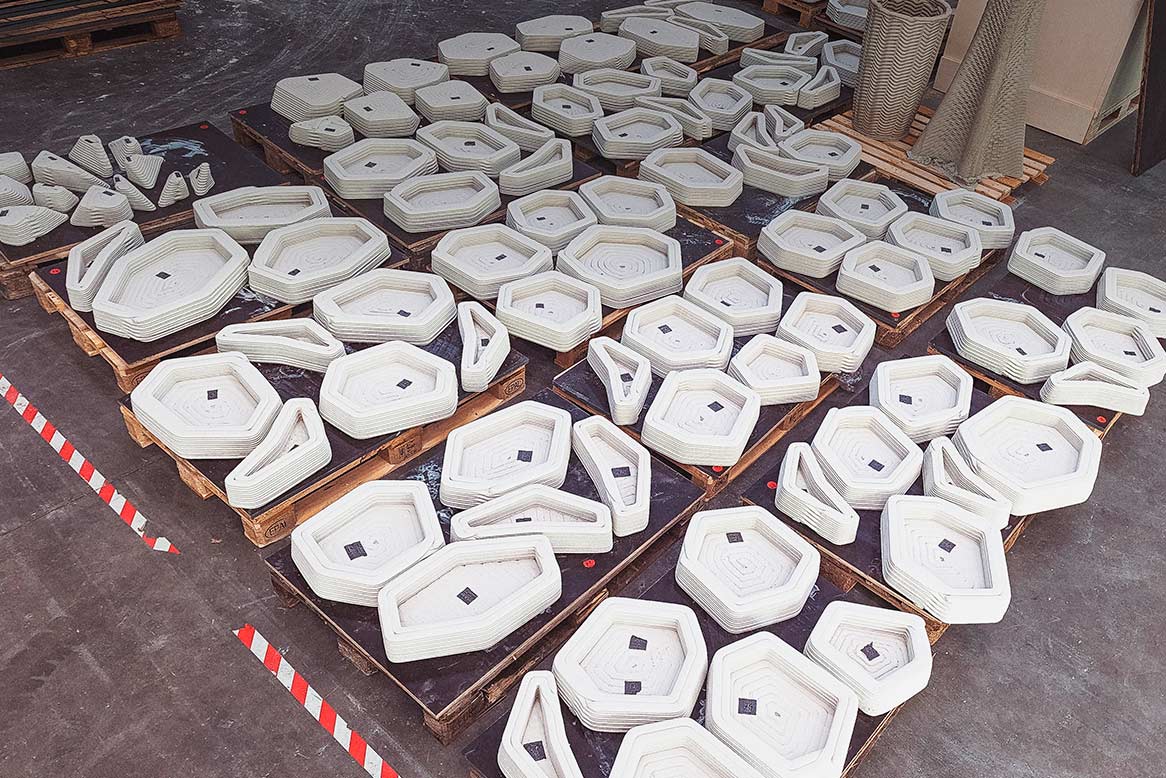
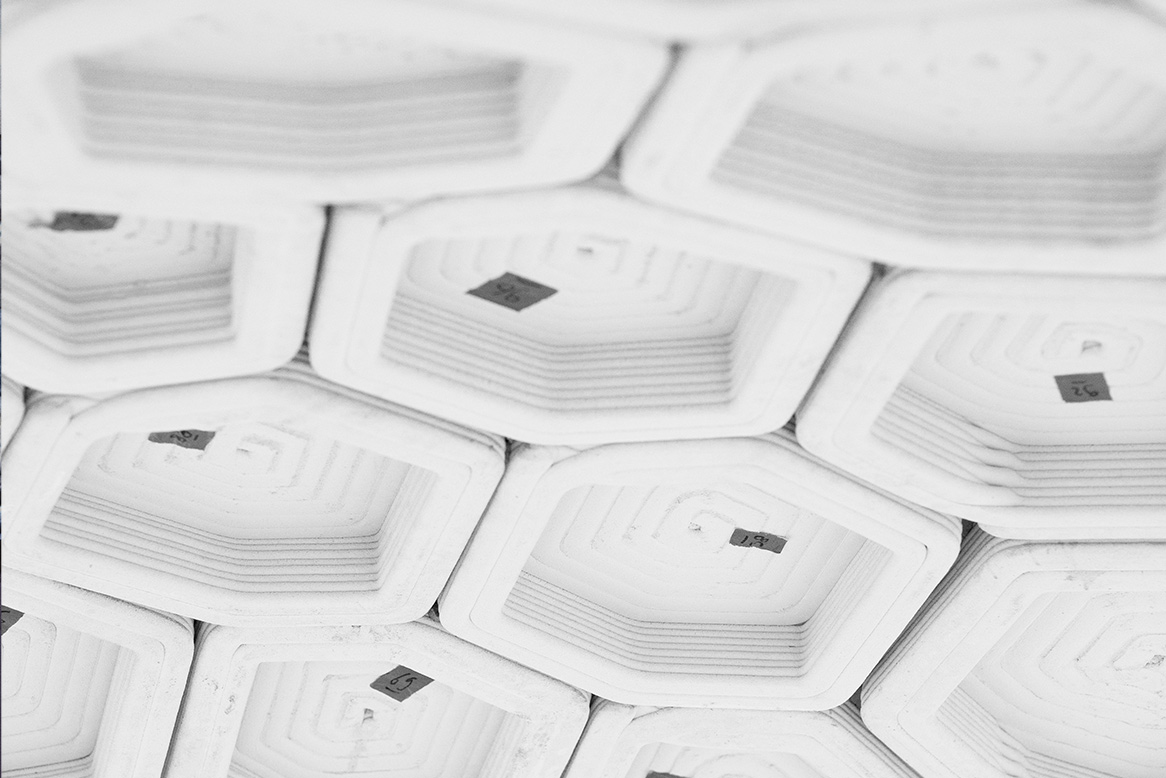
The shell geometry was tessellated into planar hexagonal tiles so each stone could be printed flat on a planar printing bed. The tessellation also simplifies the seams between the individual stones.
Traditional brickwork creates curvature with tapered mortar joints between uniform bricks. In the hexa-shell, the curvature comes from the individually inclined perimeter of each stone. Every stone carries part of the overall curve, which leaves parallel joints between neighbors.
102 stones in two printing days
The finished pavilion is a dome of 102 interlocking stones spanning about 4.5 m in diameter. Vertico printed all 102 distinct stones in two printing days.
Because the process is digital from design to production, the stones can take many different geometries without extra effort. The same applies to the overall shape of the structure. Read more about the method in our guide to 3D concrete printing.
Key highlights of the pavilion
Structural efficiency
The pavilion follows old architectural principles that put form and function first. 3D concrete printing makes structurally efficient shapes cost-effective to produce.
Using material efficiently matters more as resources may become scarce and as the emissions of built structures come under scrutiny. The pavilion aims to revive structurally efficient design.
Design for disassembly
Instead of the usual "build and demolish" approach, the pavilion was engineered to be taken apart. After its showing at Nordbau 2023, the structure will be disassembled and reassembled at a location yet to be announced.
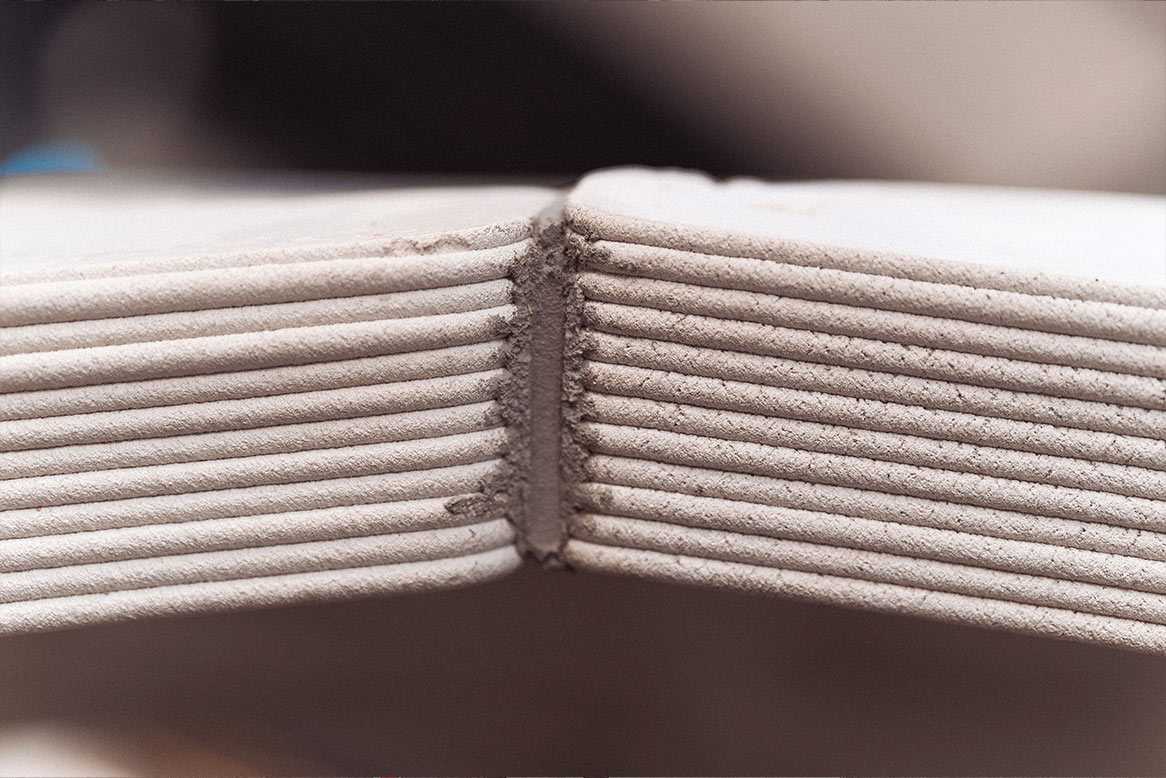
The seams between the stones only carry compression, so the mortar just compensates for tolerances. The contact surfaces are coated with a non-adhesive agent. This prevents tensile forces from transferring across the joints and makes disassembly easier.
Optimal material usage
The design puts material where it performs best. It eliminates bending moments, uses concrete in compression and steel in tension.
The aim is a future where strategic material choices reduce the amount of material needed while improving the longevity and strength of a structure.
Education and hands-on experience
The pavilion was also a learning project. As part of their university classes, master students from architecture and engineering courses took an active part in its design and construction.
That hands-on work gave the next generation of architects, engineers and builders direct experience with digital fabrication. See how Vertico supports this kind of work in education and research.
Partners
The collaboration between Technische Hochschule Lübeck, Vertico and Sika shows how digital fabrication can revive timeless architectural principles in efficient, sustainable structures. Follow the first public reveal in our Hexastone news post, or see a related compression structure in the Minimal Vault project.
Credits
- Computational modeling and digital structural design: Prof. Herrmann and Prof. Spaeth, Technische Hochschule Lübeck
- 3D concrete printing: Vertico
- Construction materials: Sika


Dive Into the new era of design with Vertico
Discover Vertico's state-of-the-art concrete 3D printing solutions that turn visionary ideas into reality.