3D-Printed Sand Mould Facades for TU Eindhoven
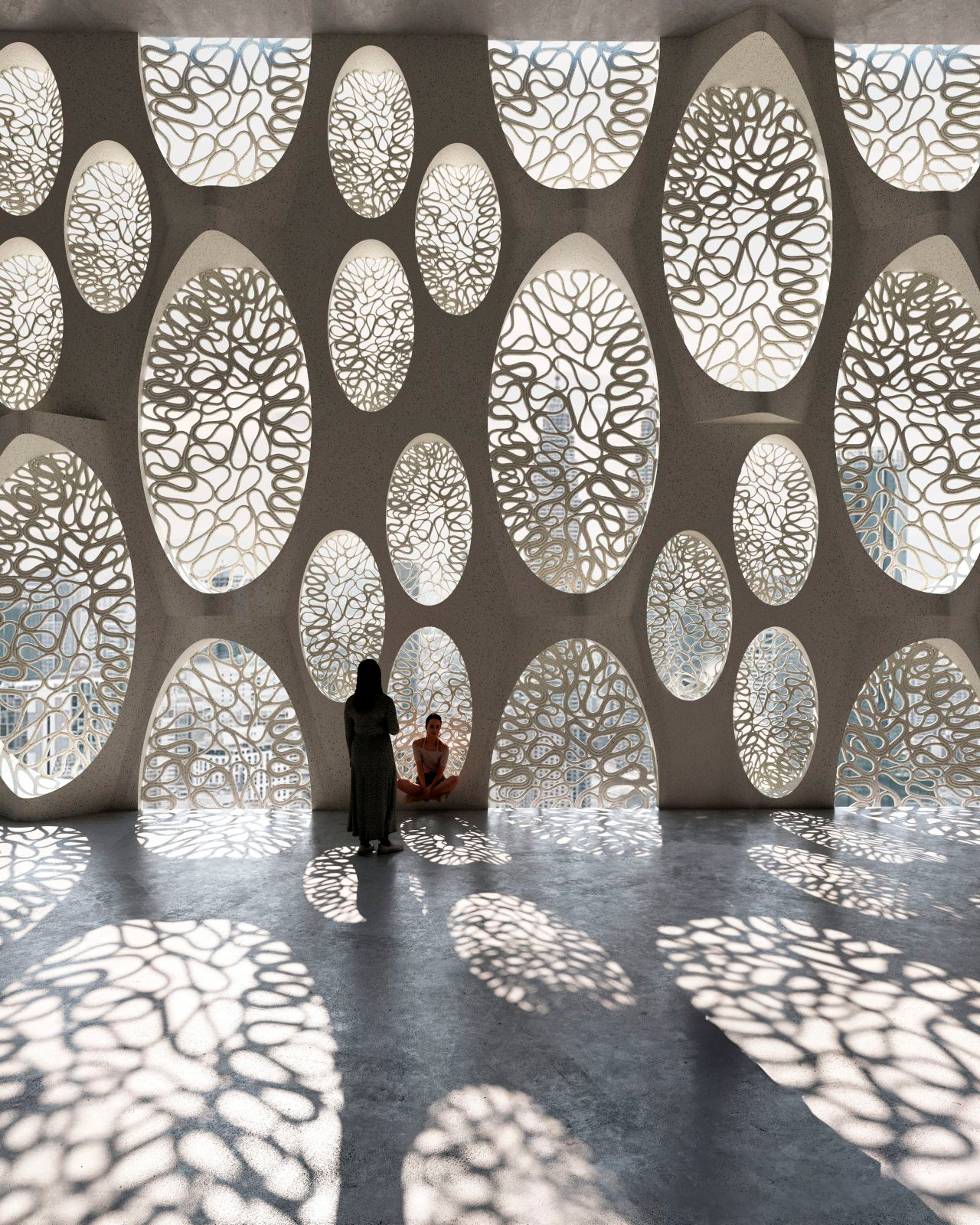
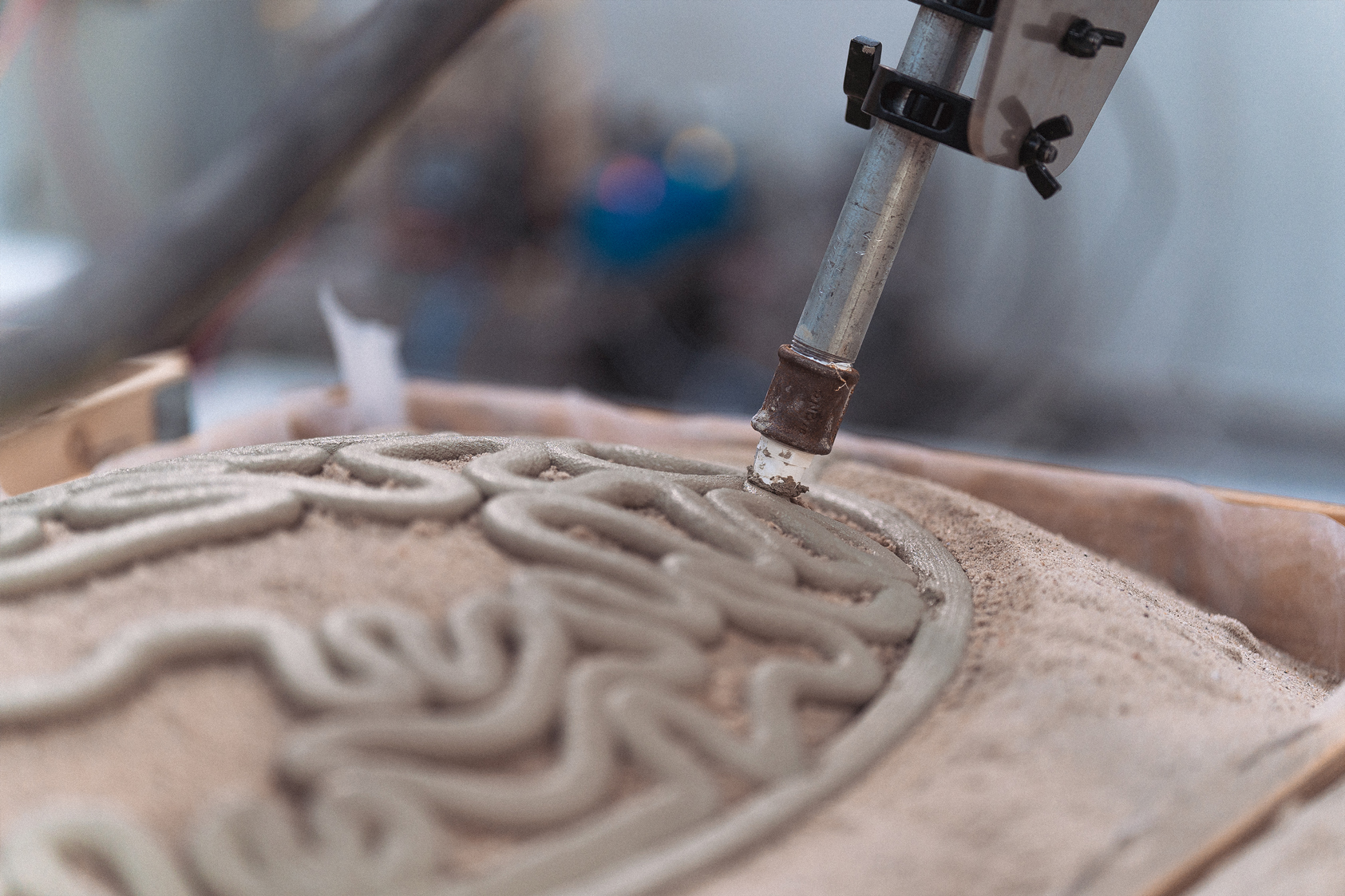
Vertico worked with the Technical University of Eindhoven to 3D print double-curved façade panels on robotically shaped sand moulds. The research tested whether filigree concrete façades can be made without traditional formwork. It also looked at how prefab construction could follow circular principles.
Design research team
The project brought together Prof. Juliette Bekkering, Ass. Prof. Cristina Nan, Alessio Vigorito of Summum Engineering and Neutelings Riedijk Architects, with Vertico handling the 3D concrete printing.
The goal
The team set out to investigate the technical feasibility and architectural expression of double-curved façade elements with filigree infill.
The aim was to rethink prefab construction through robotic printing technologies and circular principles.
Concrete as lacework
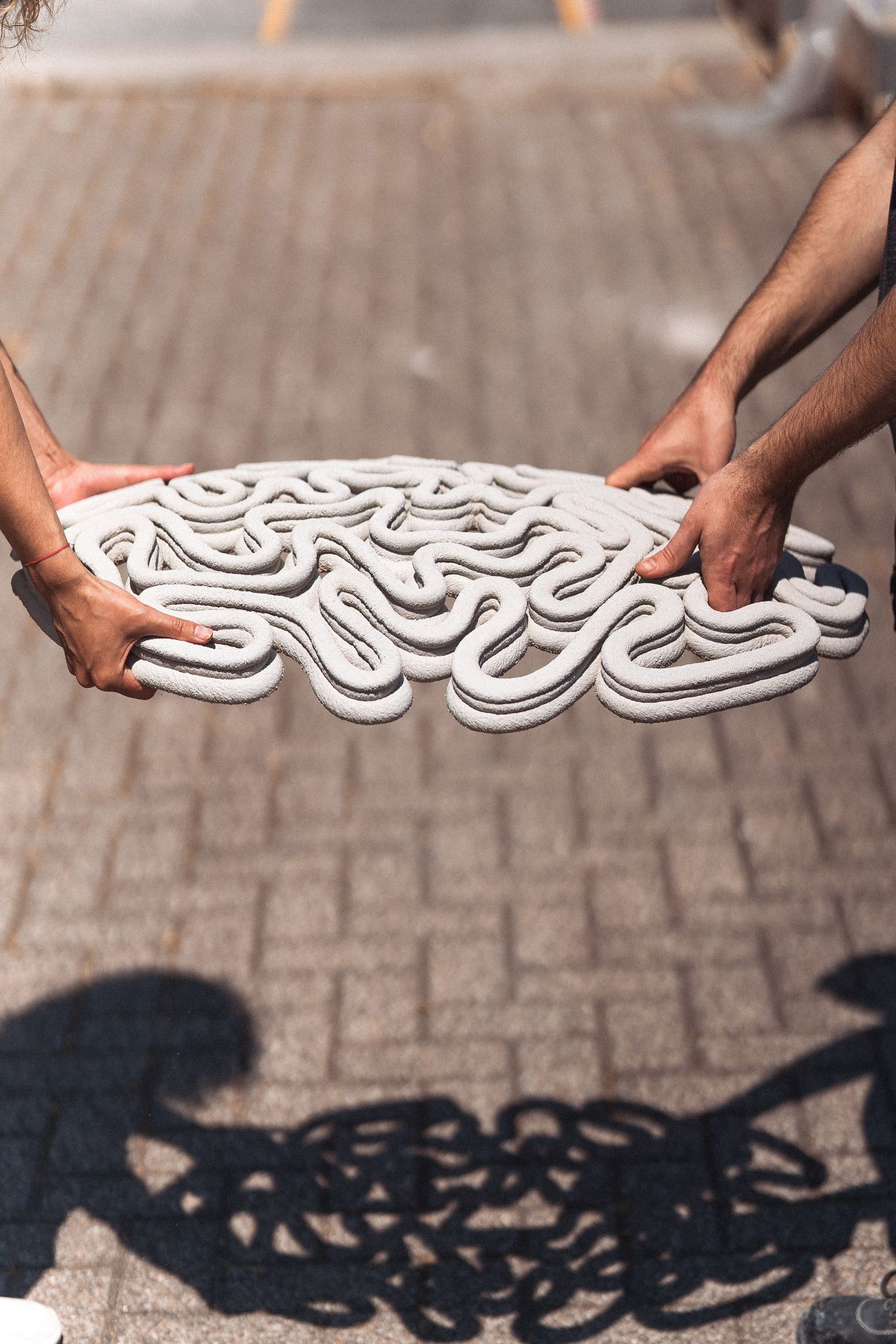
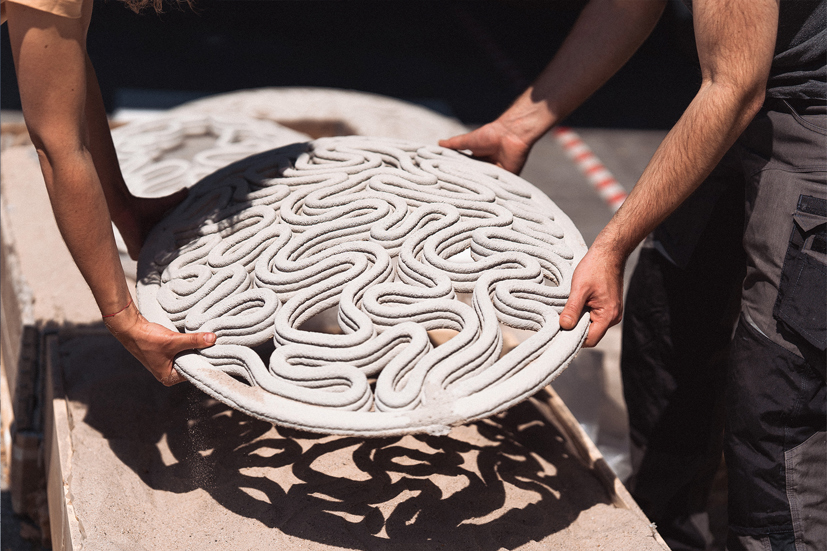
With Vertico's 3D printing system, the team printed delicate, double-curved lattice structures. They were inspired by the visual language often seen in the work of Neutelings Riedijk Architects.
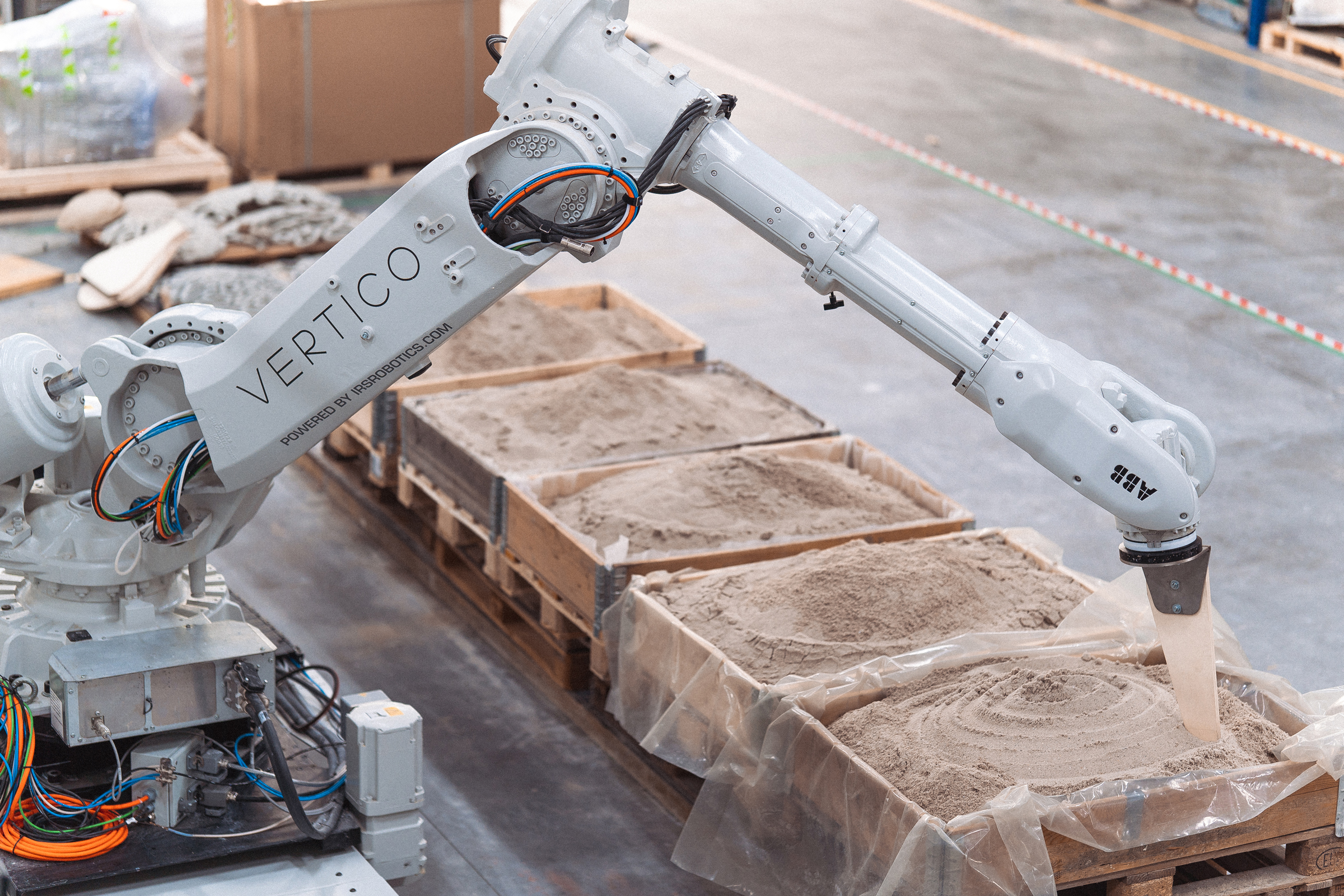
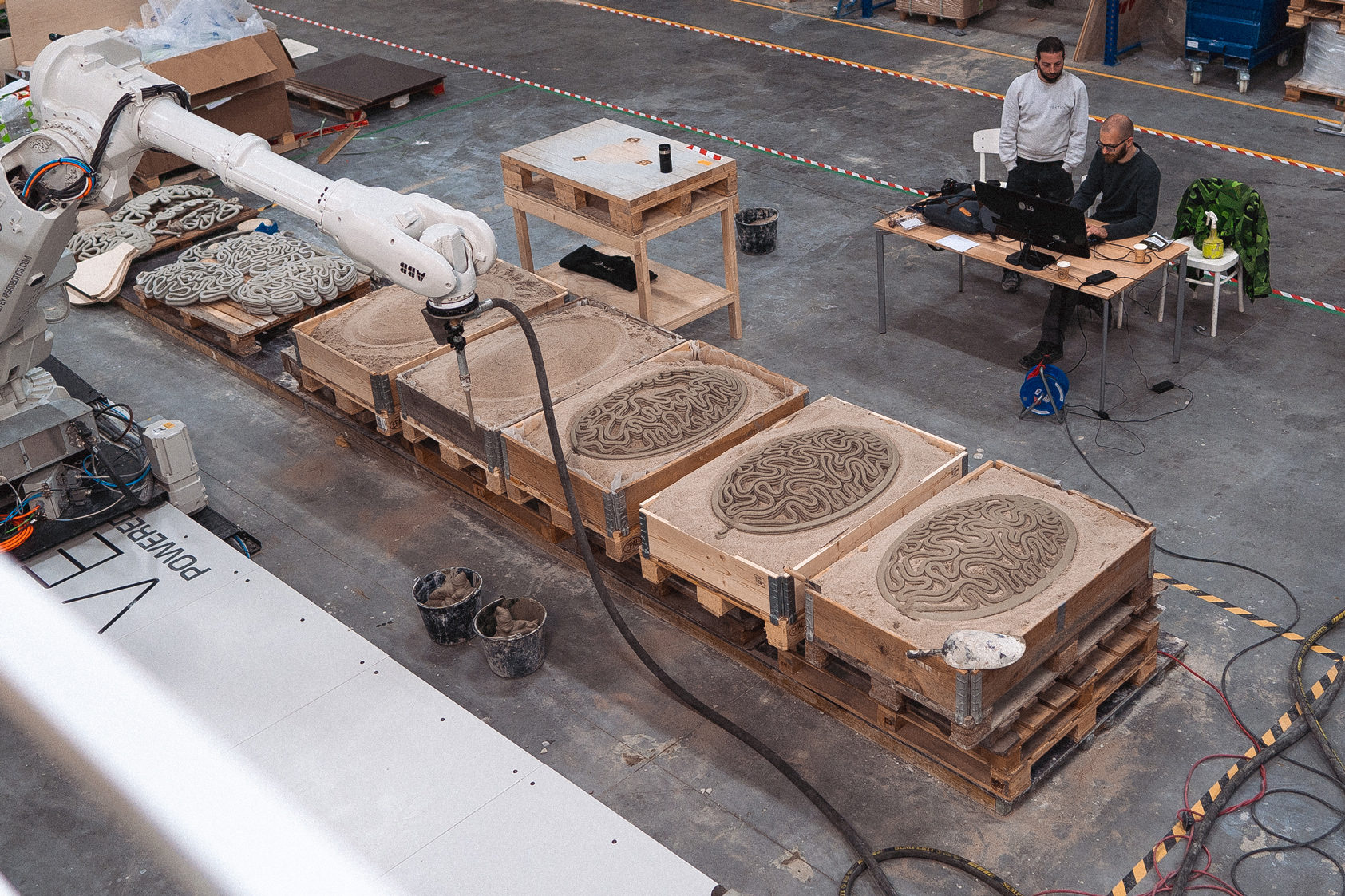
The forms were printed directly onto a robotically shaped bed of sand, so no traditional moulds or wasteful materials were needed. See an early look at this work in our sand moulds news post.
The approach made complex, lightweight façades and translucent wall elements possible. These would be costly or impossible to produce with conventional methods.
Toward circular construction
A core objective was a production method that supports circular construction. Reusable, robotically shaped sand beds replaced timber, foam and plastic moulds.
That reduced material waste and gave a more responsible way to produce expressive architectural components. The sand can be reused over multiple cycles, which opens the way to more material-efficient construction.
Full-scale prototypes
The full-scale prototypes printed during the research show how robotic 3D printing can serve both architectural ambition and structural performance.
Parametric tools such as Grasshopper defined the geometry and the print logic. Iterative material strategies helped reduce concrete use without giving up strength or quality.
The panels can work as screens, dividers or structural elements. Read more about where this is heading in our article on 3D printed façades in architecture, or see how Vertico supports universities and research.
Credits
- University: Technical University of Eindhoven
- Research: Prof. Juliette Bekkering, Ass. Prof. Cristina Nan
- Engineering: Alessio Vigorito, Summum Engineering
- Architecture: Neutelings Riedijk Architects
- 3D concrete printing: Vertico



Dive Into the new era of design with Vertico
Discover Vertico's state-of-the-art concrete 3D printing solutions that turn visionary ideas into reality.