Topology-optimized 3D-printed bridge: Collaboration with University of Ghent
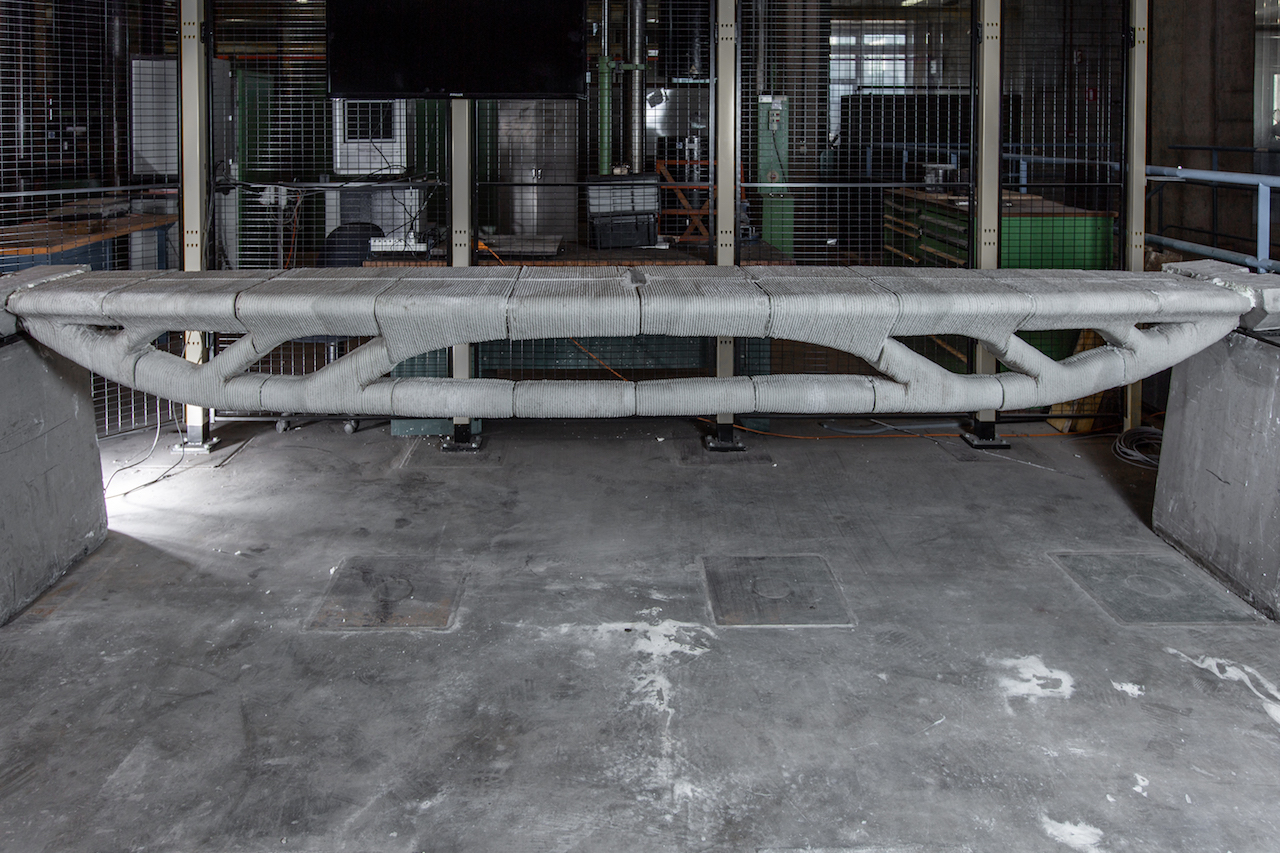
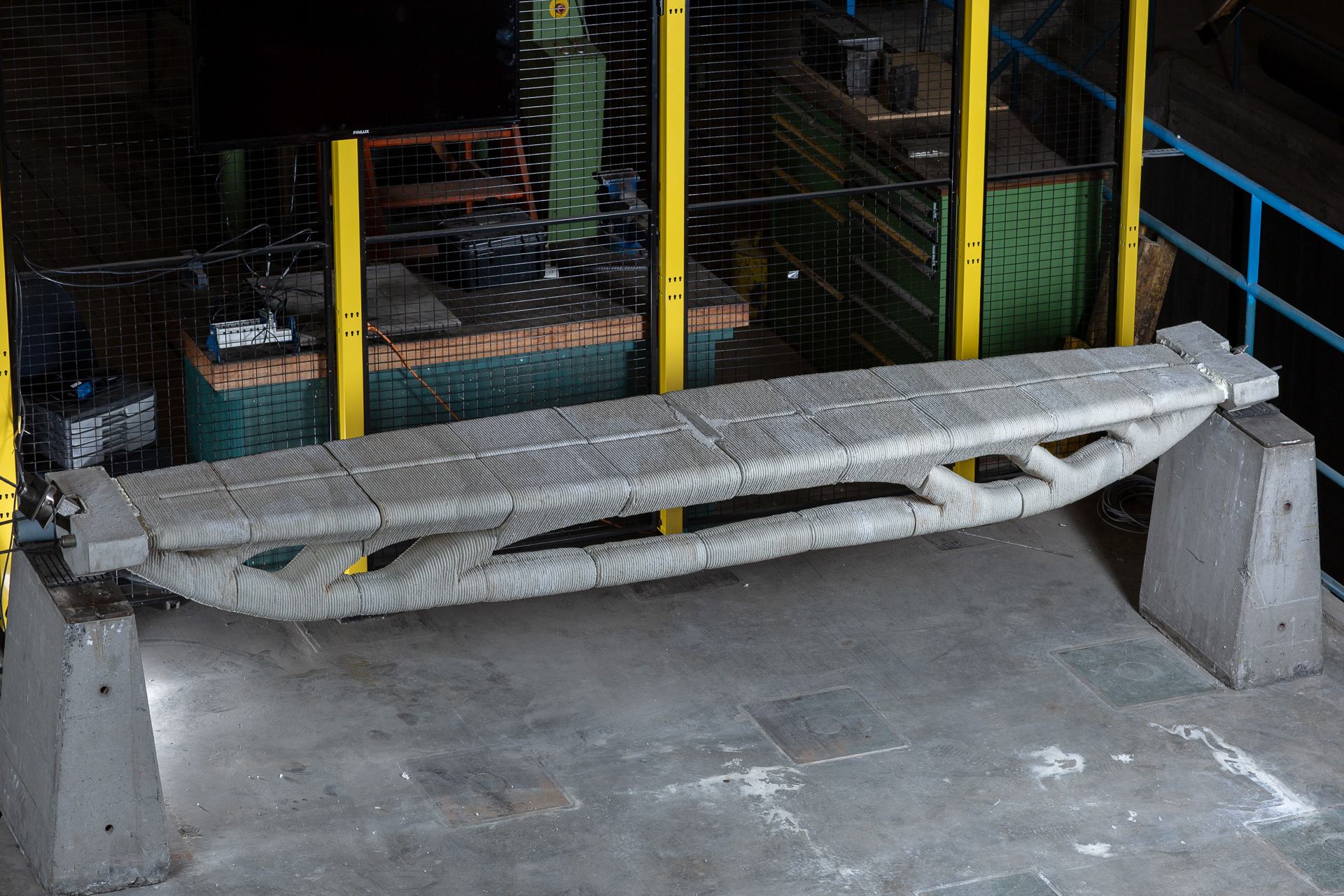
Vertico 3D printed a topology-optimized pedestrian bridge in collaboration with the University of Gent and the Technion Israel Institute of Technology. The design puts structural efficiency and material reduction first, in line with more sustainable construction.
A new approach to structural design
Computational modeling shaped the bridge's geometry around compression forces. This reduces the amount of material without compromising strength.
Because the bridge was 3D printed, no traditional molds were needed. That made it possible to build intricate forms that are functional and visually striking at the same time.
Key benefits
- Sustainability: using less material lowers the carbon footprint. See the environmental benefits of concrete 3D printing.
- Precision engineering: computational design gives maximum load-bearing efficiency.
- New applications: the bridge shows the potential of 3D printing for large-scale infrastructure.
A model for future infrastructure
The bridge shows what 3D concrete printing can do for efficient, sustainable construction and serves as a model for future work. For another printed bridge, see the Diamanti modular post-tensioned bridge.
Collaborations like this with universities are a core part of our work in education and research, and in 3D concrete printing for construction.
Credits
- Research partners: University of Gent, Technion Israel Institute of Technology
- 3D printing: Vertico


Dive Into the new era of design with Vertico
Discover Vertico's state-of-the-art concrete 3D printing solutions that turn visionary ideas into reality.