OPENCALL

1. Introduction
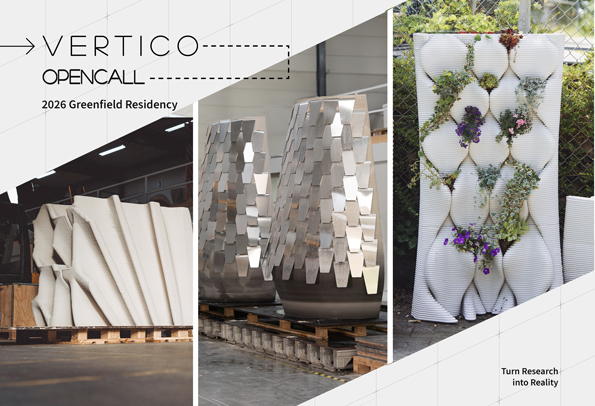
Applications are now open for the Vertico Greenfield Residency 2026.
The Greenfield Residency is an annual initiative created to support universities, research groups, and academic studios that want to explore advanced robotic fabrication but may not have direct access to industrial equipment. Each year, Vertico opens its workshop in Eindhoven and welcomes selected academic teams to spend a week developing and producing a full-scale prototype using our robotic manufacturing technologies.
The residency is designed specifically for professors, assistant professors, and studio supervisors working together with student groups. Whether your research focuses on computational design, digital fabrication, material innovation, architecture, engineering, or robotics, we invite you to submit your proposal and explore how your ideas can be realized through robotic manufacturing.
At Vertico, we believe innovation should be accessible. By sharing our technology, facilities, and expertise, we aim to help students gain hands-on experience while supporting researchers in testing ambitious ideas at a meaningful scale.
2. Program Goals
The Greenfield Residency provides participants with direct access to industrial robotic fabrication technologies in a real production environment.
Selected team will spend one week at the Vertico facility, working closely with our team to develop and manufacture a physical prototype. The program is designed to bridge the gap between academic research and practical implementation, allowing participants to experience the challenges and opportunities of full-scale robotic fabrication.
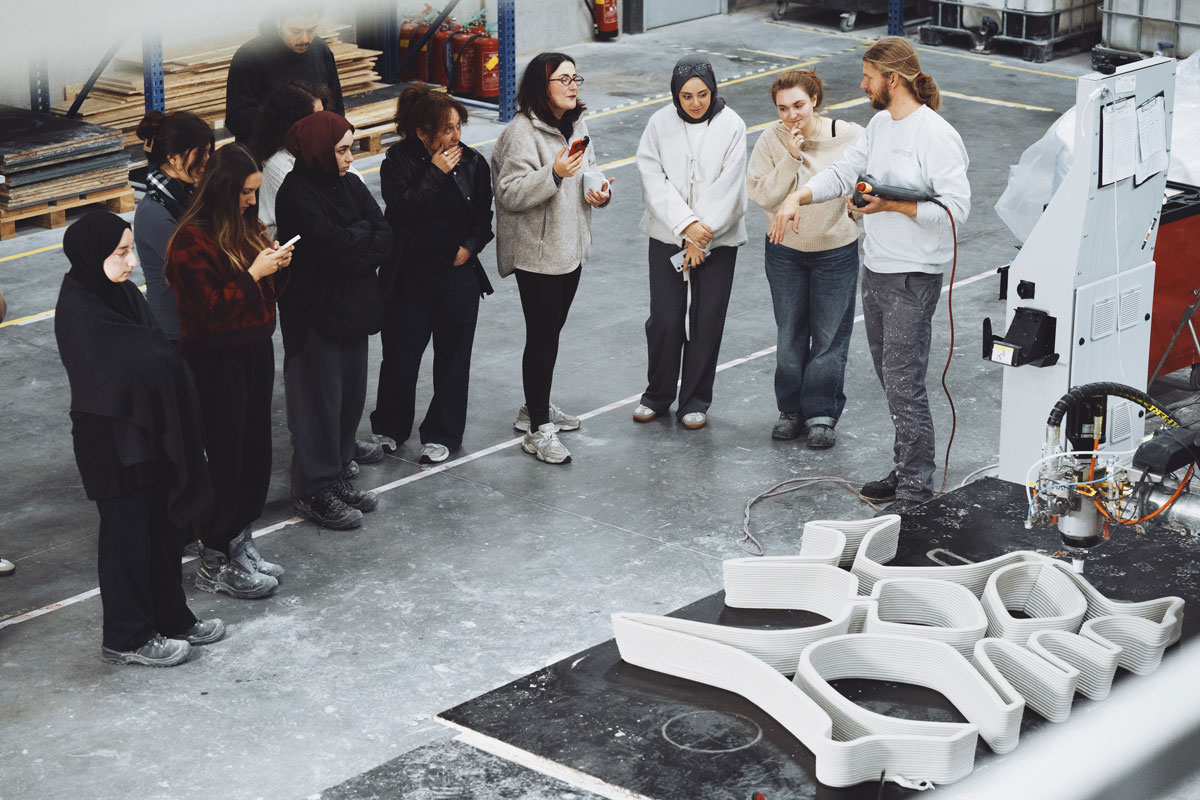
The residency encourages experimentation, innovation, and interdisciplinary collaboration across architecture, engineering, design, material science, and related fields.
3. Program Brief
Submitted projects must utilize Vertico's robotic systems as an essential part of the manufacturing process.
While Vertico is best known for concrete 3D printing, proposals are not limited to concrete applications. We welcome projects that explore alternative materials, fabrication methods, and hybrid manufacturing approaches, provided that robotic production plays a central role in the realization of the project.
Projects may investigate topics such as:
- Computational design
- Digital fabrication
- Material innovation
- Robotic manufacturing
- Architectural systems
- Structural experimentation
- Environmental design
- Product design
- Human-robot interaction
- Hybrid production methods
The residency is intended for academic teams rather than individual participants. Applications should be submitted by a professor, assistant professor, or studio supervisor representing a group of students from the same course, studio, laboratory, or research program.
While Vertico provides access to machinery, workspace, safety guidance, and limited technical support, participants are expected to have a basic understanding of digital design and robotic workflows relevant to their project.
4. Previous editions
Greenfield Residency 2024
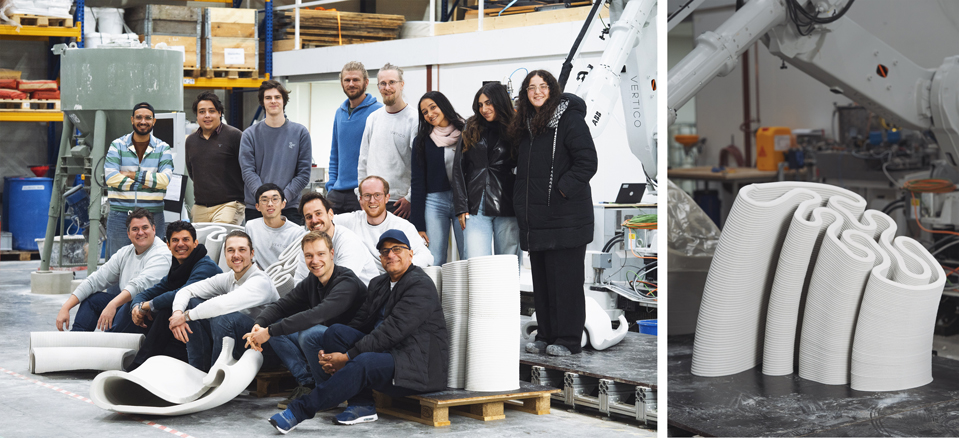
The first Greenfield Residency welcomed a team from Cairo University led by Professor Noeman.
Their project explored Laplacian growth as a design strategy, translating natural branching systems into a large-scale parametric bench. Throughout the residency, students worked directly with robotic fabrication technologies while addressing challenges related to non-planar printing, geometry optimization, and structural performance.
The project demonstrated how computational design research can move beyond simulation and become a tangible architectural prototype.
Greenfield Residency 2025
The winning proposal of the 2025 edition came from the Responsive Ground Research Lab of Gebze Technical University and Isik University, led by Assoc. Prof. Dr. Fitnat Cimşit Koş.
Their project, Water-Ground Structures, investigates the relationship between ecological systems and digital fabrication through hybrid material assemblies and layered bio-receptive geometries.
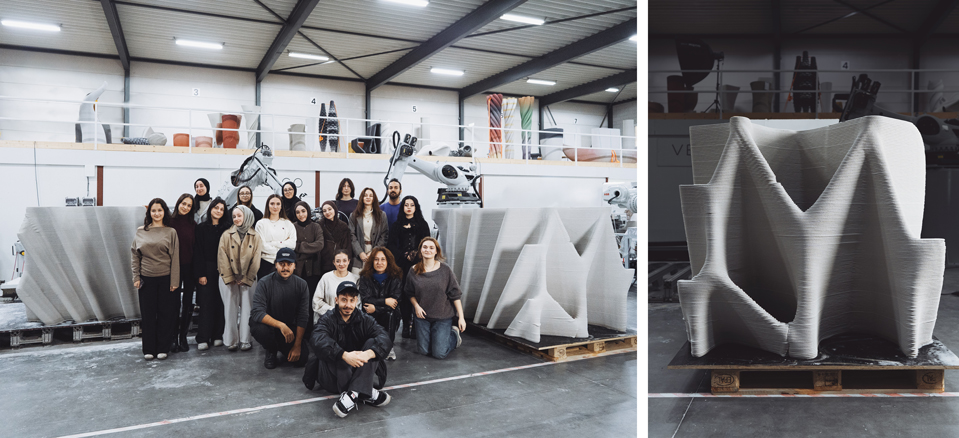
The quality of submissions in 2025 was exceptionally high, leading to several additional collaborations beyond the winning proposal.
Greenfield Beta | Berlin
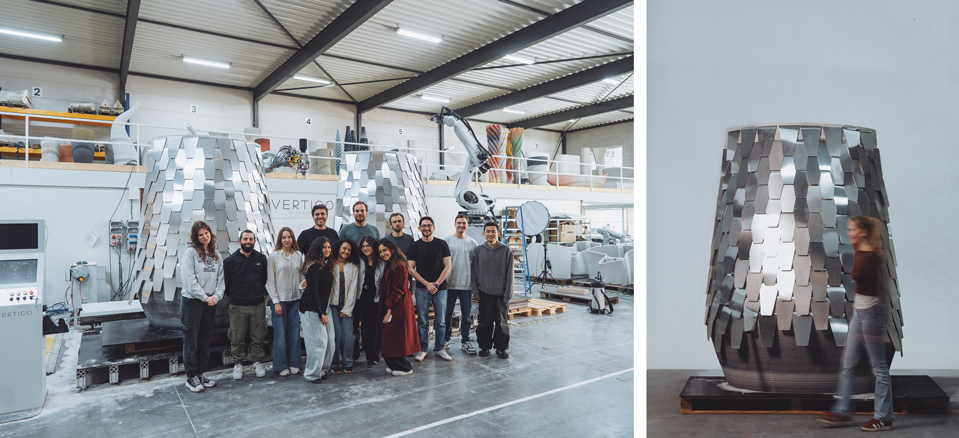
One of these collaborations was developed with students from German International University in Berlin under the guidance of Giovanni Betti.
The project explored an integrated cladding system in which aluminum shingles are inserted directly during the fabrication process. The resulting pavilion prototype demonstrated how structure and enclosure can be combined into a single robotic workflow, opening new possibilities for modular and climate-responsive architecture.
Greenfield Beta | Woodbury University & HKS
Another collaboration emerged from research conducted through HKS LINE and a Biodigital Making course led by Juliette Zidek at Woodbury University.
The project explored bio-integrative architecture through a 3D printed living wall featuring planting pockets, water-distribution channels, and bioreceptive textures. The research investigated how geometry can simultaneously support plant growth, environmental performance, and structural stability.
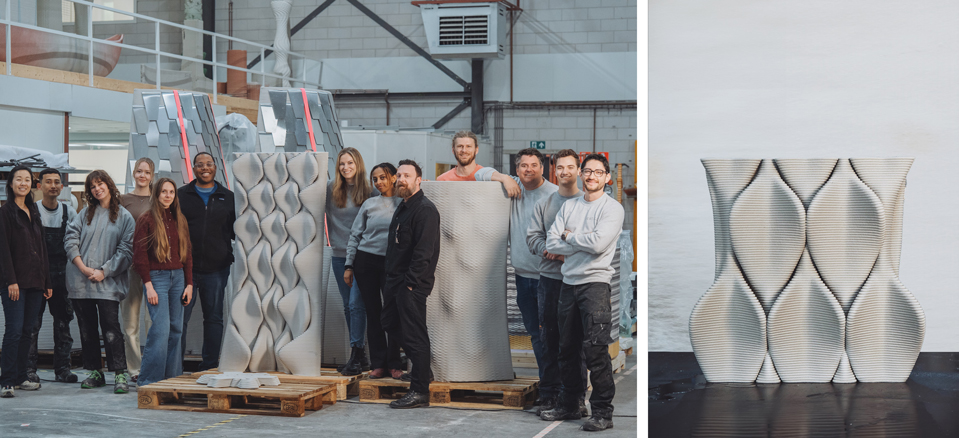
Together, these projects demonstrate the diversity of ideas that Greenfield can support, ranging from ecological systems and material innovation to robotic fabrication, architectural research, and experimental construction.
5. Eligibility
The Greenfield Residency is open exclusively to academic institutions.
Applications must be submitted by:
- Professors
- Associate Professors
- Assistant Professors
- Studio Supervisors
- Research Leaders
Each application should represent a group of students working together on a shared project or research topic.
Unfortunately, individual student applications cannot be considered.
We welcome submissions from institutions around the world and encourage proposals from diverse disciplines including architecture, engineering, design, robotics, fabrication, material science, and computational research.
6. Deadlines
Project idea submission: July 26th, 2026 (max 500 word statement)
Selection round/ online interviews: July 28th - August 7th
Winners announvement: August, 2026
Production week: November, 2026 (flexible)
7. Submission requirements
1st round. Project Proposal
Applicants are asked to submit a project description of approximately 500 words.
The proposal should include:
• Project concept
• Research objectives
• Technical approach
• Relevance of robotic fabrication
• Feasibility within the residency framework
• Team experience and capabilities
• Preliminary visual material illustrating the proposed project (renders/ diagrams/ sketches/ design drawings/ material studies/ previous prototypes)
Submit file in pdf format, you can download submission form on the right side of the page
Project size Requirements
• A single printed element should generally fit within 800 × 1200 × 2500 mm (L×W×H).
• Projects may consist of multiple modules or components assembled after fabrication.
• If your project requires a larger build volume and cannot reasonably be modularized, please explain this in your proposal.
Larger projects may be considered for particularly strong submissions.
Round 2 | Online Interview
Selected applicants will be invited to an online interview where they can further present their project and discuss technical requirements, production strategy, and expected outcomes.
Detailed technical documentation is not required during the first application stage
8. Technical Information about our facility
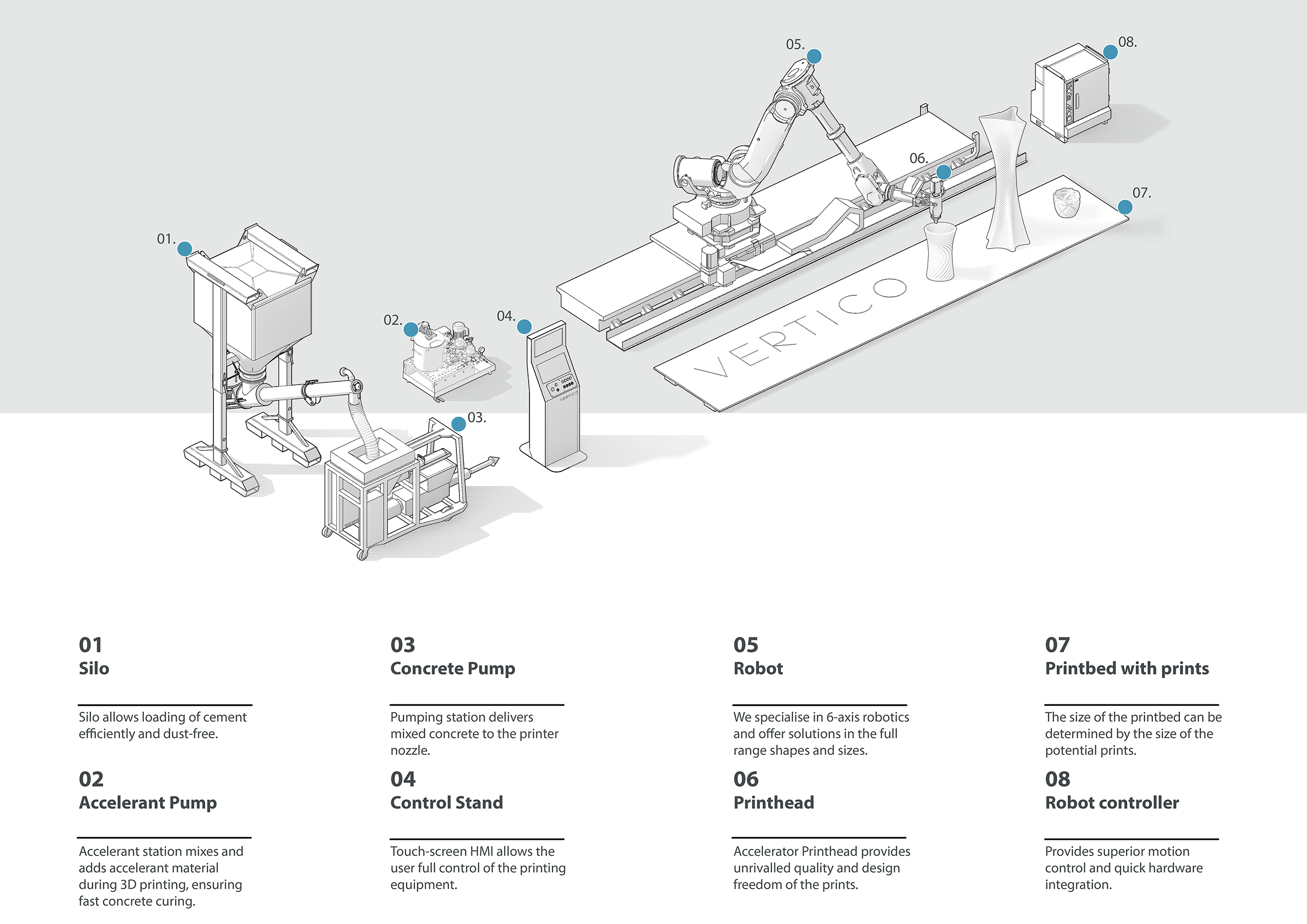
Equipment available:
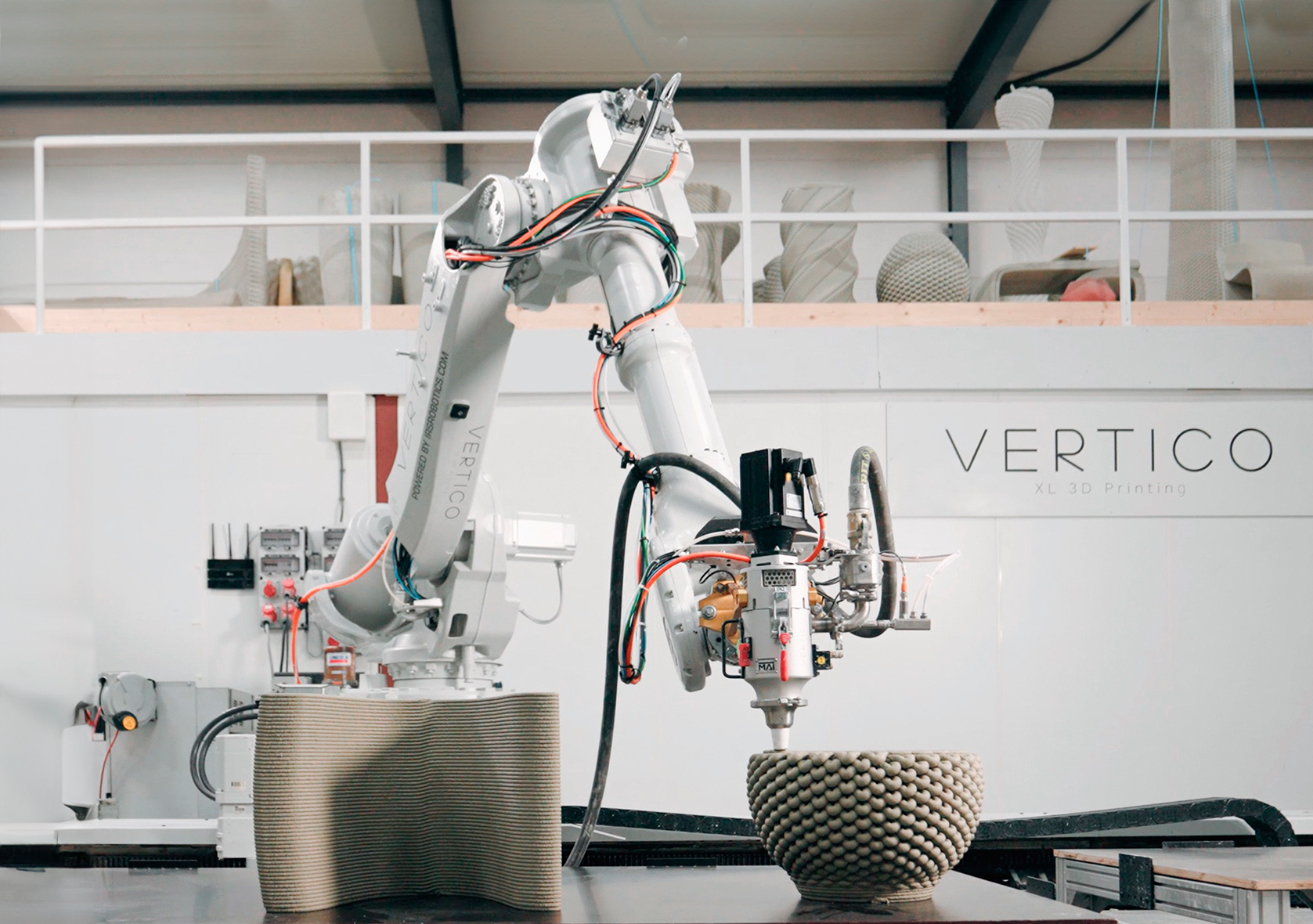
- Robot on track (ABB6400 – 3.2m reach 150kg payload on a 4.7m travel track)
- Printbed
- 2k Printhead for 3d concrete printing (if needed)
- Silo (if needed)
- Pump (if needed)
- Kuka Robot 240 R2700 prime (if needed)
- Opening hours from 9 AM to 5 PM
- WiFi is provided
- Max 12 students are allowed
You will be responsible for cleaning and returning the space to the original state.
* Important information
Participants are responsible for arranging their own travel and accommodation.
9. Confidentiality
Participants agree to respect the confidentiality of any proprietary information shared by other participants or the workshop organizers.
Any confidential information disclosed during the workshop must not be shared outside the workshop without explicit permission.
10. Health and Safety
Participants must follow all health and safety guidelines provided by the workshop organizers and the facility.
Participants are required to wear appropriate personal protective equipment (PPE) at all times when in the facility.
Any injuries or accidents must be reported immediately to the workshop facilitators.
11. Liability
The workshop organizers are not liable for any personal injury, loss, or damage to personal property that may occur during the workshop. We will provide you with safety instruction before starting production.
Participants are responsible for their own travel and accommodation arrangements and expenses.
12. Photo and Video Consent
Participants consent to being photographed and video recorded during the workshop. These recordings may be used for promotional, educational, and documentation purposes by the workshop organizers. Participants will be allowed to make their own content during the project, use of this content must be approved by Vertico.
13. Acceptance of Terms
By confirming participation in the workshop, participants acknowledge that they have read, understood, and agree to these terms and conditions.
14. Contact Information
For any questions or concerns regarding these terms and conditions, please contact:
victoria.fedorova@vertico3d.com
15. Address
Our facility is located in Eindhoven, Netherlands.
Address: Urkhovenseweg 3, 5641 KA Eindhoven
By participating in this Open Call, you agree to comply with and be bound by the terms and conditions. Please read them carefully.


Related Articles


Dive Into the new era of design with Vertico
Discover Vertico's state-of-the-art concrete 3D printing solutions that turn visionary ideas into reality.