Hybrid 3D Printing & Milling for Acoustic Façades
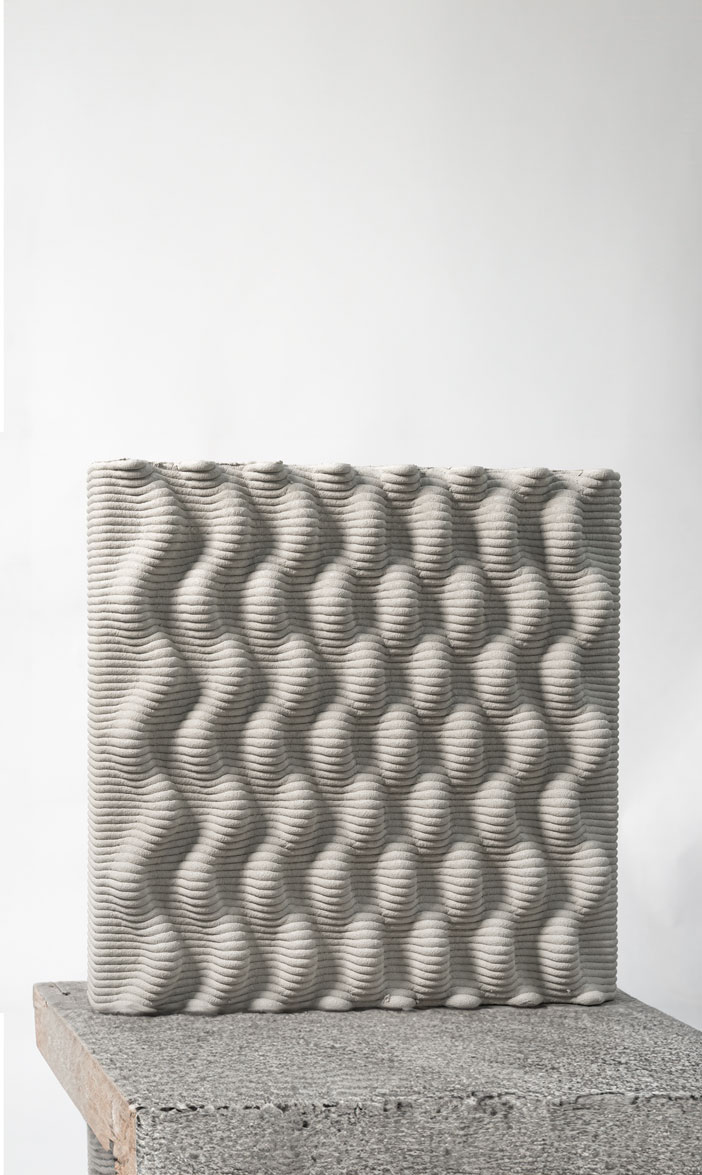
As part of his Master's thesis at RWTH Aachen University, Vertico intern Jarry Pérez López combined 3D concrete printing (3DCP) with robotic milling to improve the acoustic performance and surface precision of façade panels.
All prototypes were designed and made at Vertico's studio in Eindhoven, using an ABB IRB 6640 robotic arm and the 2K MAI-Vertico printhead.
Research goals
The study aimed to:
- Improve the surface quality and geometric accuracy of 3D printed panels.
- Investigate how printing speed, layer height and milling parameters affect sound scattering performance.
- Develop design guidelines for sustainable, acoustically optimized architectural elements.
Process
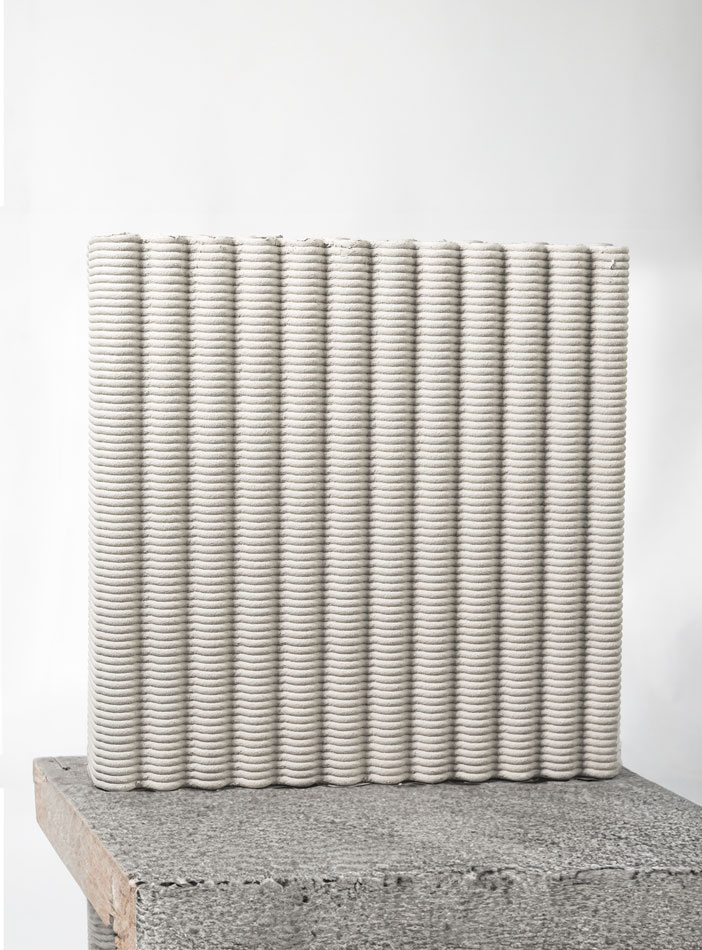
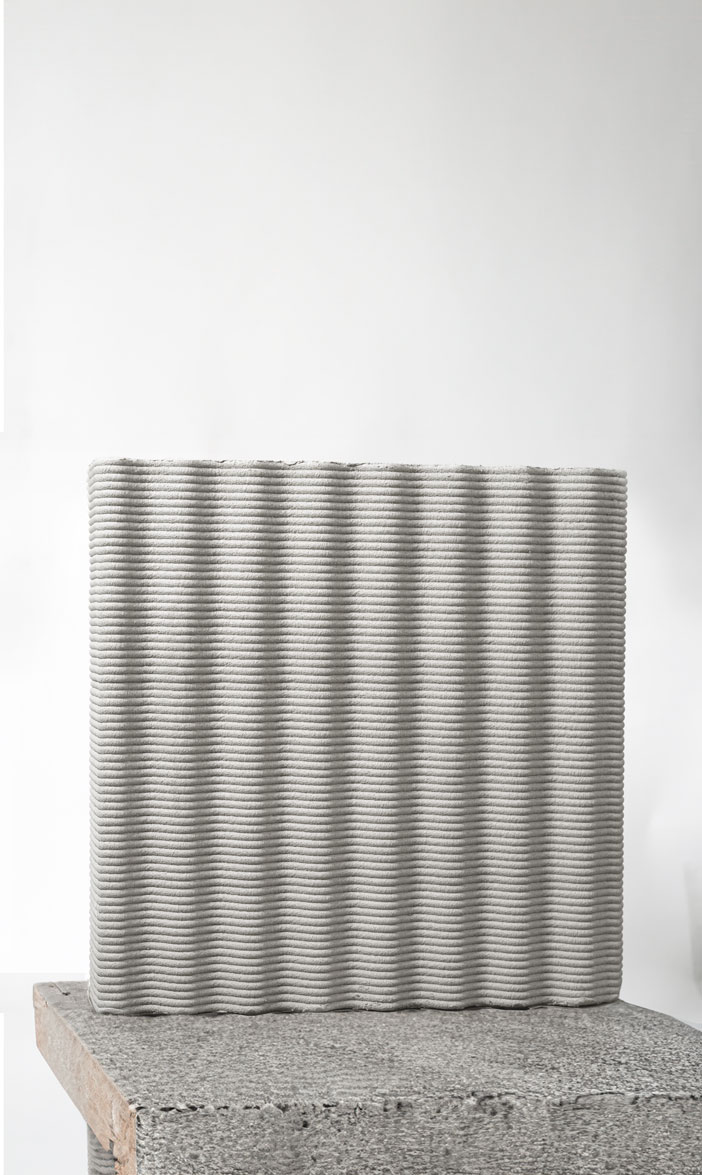
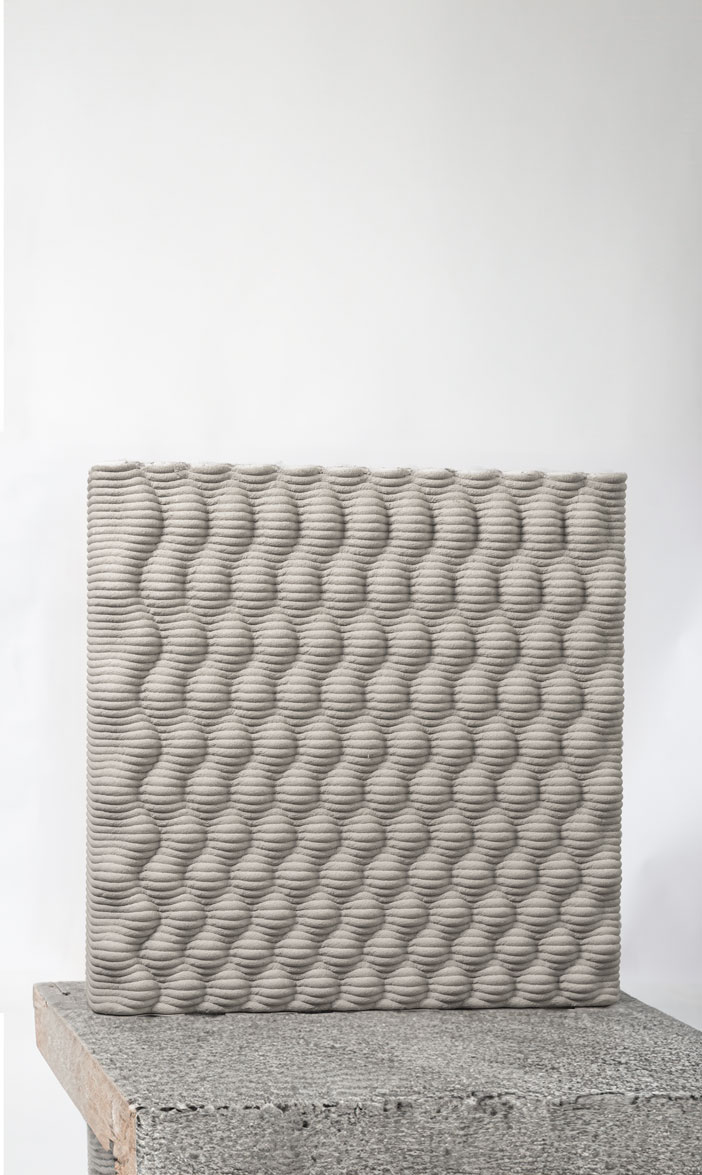
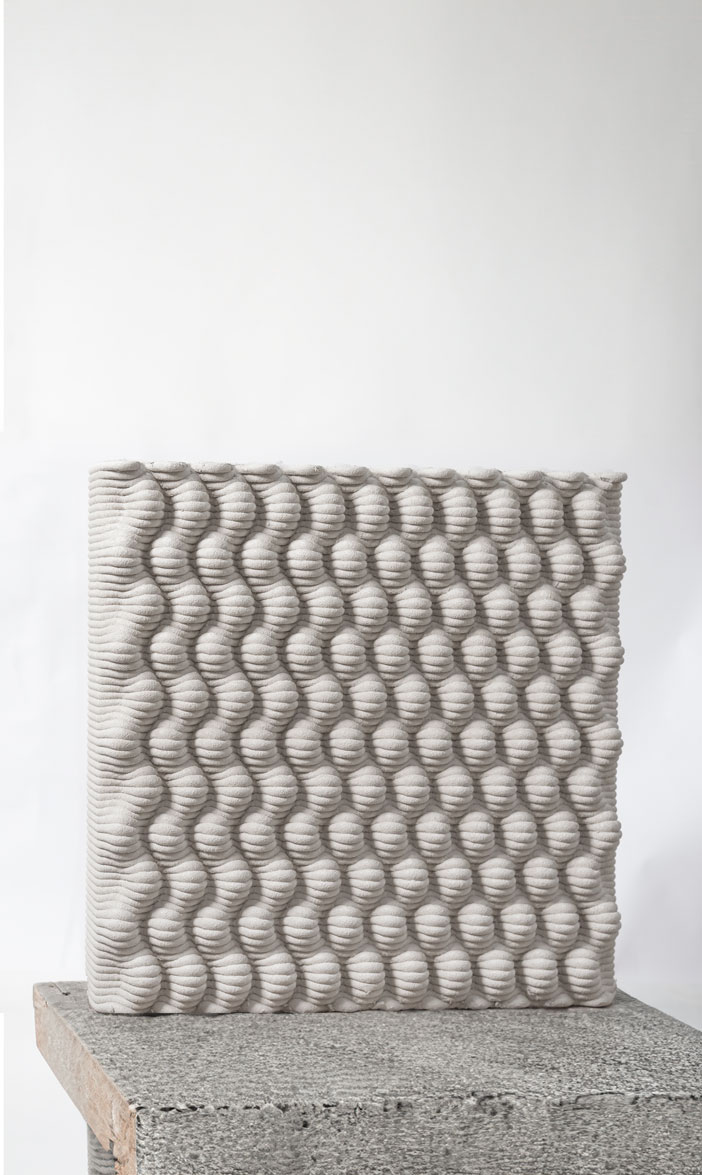
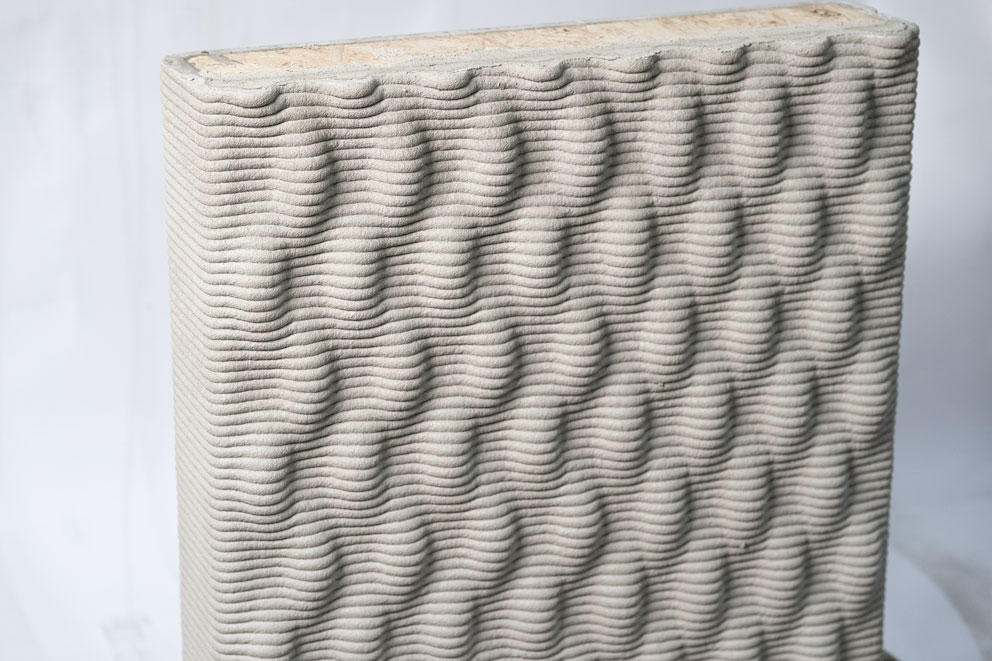
Sixteen 700 × 700 mm concrete panels were 3D printed in four design categories. They varied in surface periodicity (one-dimensional, two-dimensional and incremental patterns) and in wave depth (25 mm and 50 mm).
The panels were tested in an anechoic chamber to measure their scattering coefficients.
Two additional milled panels, M1 and M2, were produced to compare hybrid fabrication with pure 3D printing. The milling approach builds on Vertico's earlier work on concrete milling.
- M1: 8 repetitions along two axes with varying depth, based on the best-performing B-series samples.
- M2: 12 repetitions with incremental variation across two axes, inspired by the C-series designs.
Key findings
- Two-dimensional periodic surfaces with a 50 mm depth achieved the highest acoustic scattering performance, especially in omnidirectional noise diffusion.
- Milling significantly improved geometric precision and eliminated the staircase effect. This allowed sharper edges and complex geometries that printing alone cannot achieve.
- Green-state milling (after printing, before curing) gave the best balance between surface refinement and material integrity.
Outcome
The hybrid workflow showed strong potential for urban noise mitigation while offering aesthetic versatility.
Parametric design tools and robotic fabrication made it possible to go directly from digital concept to precisely made, high-performance façade components. For more on the material side, see 1K and 2K in 3D concrete printing, or how Vertico supports university research.
Credits
- Researcher (Master's thesis, RWTH Aachen University): Jarry Pérez López
- Prototyping: Vertico, Eindhoven


Dive into the new era of design with Vertico
Discover Vertico's state-of-the-art concrete 3D printing solutions that turn visionary ideas into reality.