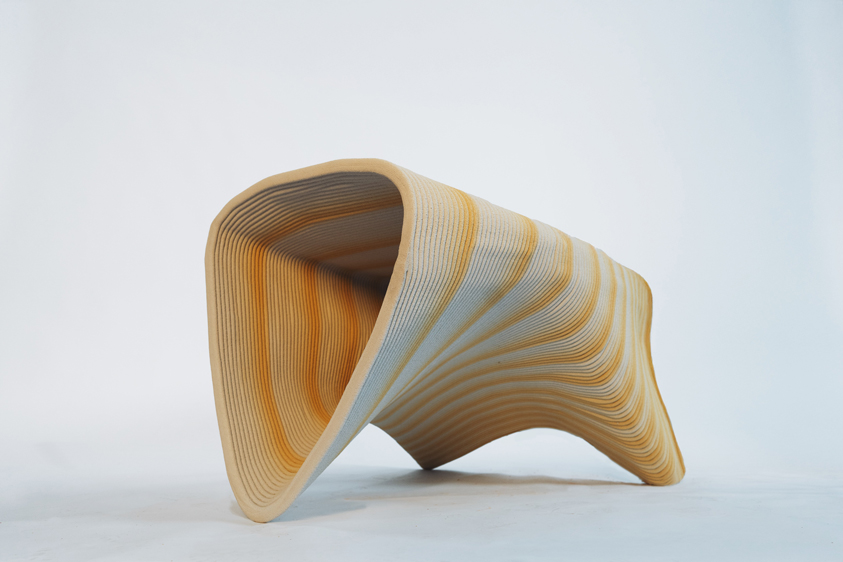
Cities are laboratories under open sky. Every bench, bollard, planter and pavilion is a small experiment in how we live together.
As budgets tighten and climate targets harden, municipalities look for solutions that deliver more with less: less material, less waste and less time on site. 3D printed urban furniture is moving from pilot to policy because it meets all three needs. It is sustainable, quick to deploy and highly designable.
What began as a showcase technology for expo pavilions is now a practical tool for shaping streetscapes that are resilient, inclusive and beautiful.
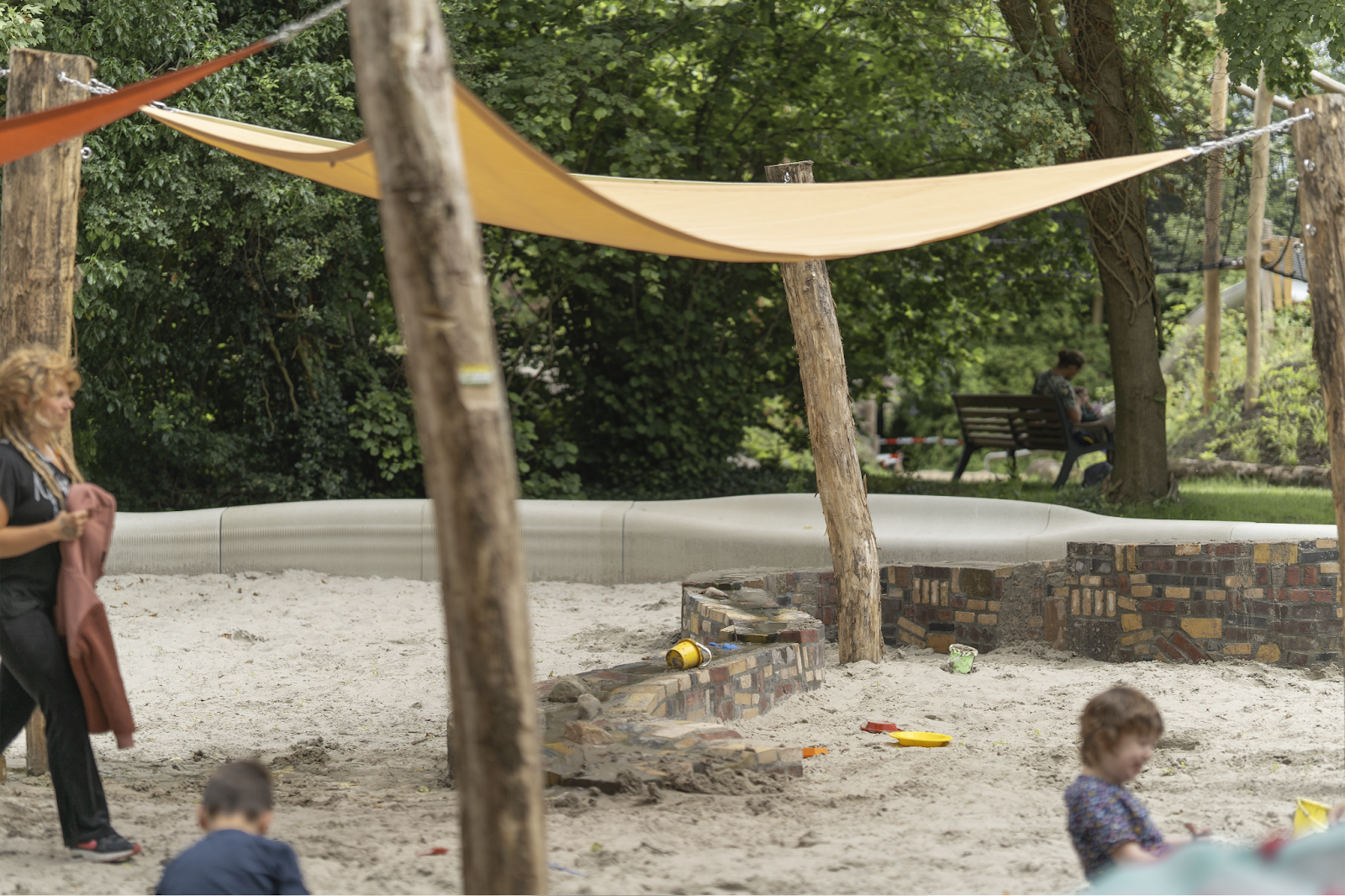
From Roman concrete to robotic arms: a brief lineage
The urge to shape public space with mineral matter is ancient. Romans perfected pozzolanic concrete to cast harbors and amphitheaters. The Bauhaus standardized form for industrial repeatability, and postwar cities embraced precast modules for speed. Each era advanced a simple idea: optimize matter for performance and manufacture at scale.
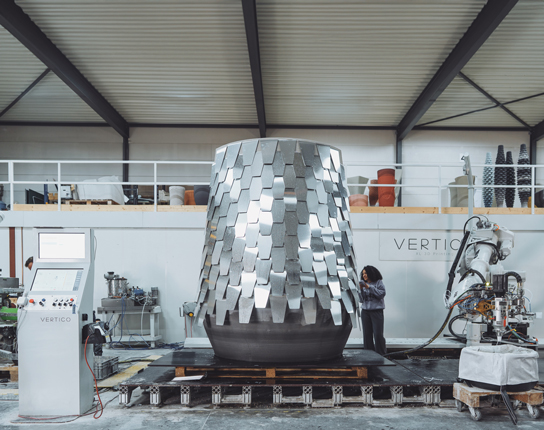
3D concrete printing (3DCP) extends that lineage. Instead of pouring into a static mold, a robotic arm or gantry lays down layers of mortar along a toolpath from a parametric model. There is no formwork and minimal waste, and geometry becomes a variable rather than a constraint.
Modernism sought universality through repetition. Digital fabrication seeks specificity through data: site gradients, pedestrian flows, microclimate and maintenance regimes can all inform the shape of a seat or the porosity of a planter.
The technical logic behind the aesthetic
Beneath the sculptural appeal lies disciplined engineering.
- Topology optimization. Classical benches are solid because molds are cheap to fill but expensive to shape. With 3DCP, design starts from forces instead of formwork. Hollow ribbed sections, arching shells and graded lattices place material only where stress demands it, reducing mass while increasing stiffness.
- Rheology by design. Printable mortars balance buildability and pumpability. Thixotropic mixes set quickly enough to stack without collapsing, yet still extrude through the nozzle. Tuning particle packing, admixtures and water-to-binder ratio gives layer adhesion and a surface finish suitable for public use.
- Performance without paint. The texture you print is the finish you keep. Micro-ribbing improves slip resistance on seat edges, integral curves shed water and chamfers protect against chipping. The object is durable from the start.
- Embedded intelligence. Conduits and voids are printed in, not drilled afterward. That allows integrated LED lighting, passive NFC tags for wayfinding, or cavities for soil and irrigation in biophilic installations, with no secondary trades required.
This is engineering as editing: remove the unnecessary and distribute what remains intelligently.

Why this matters now: four pressures on cities
- Decarbonization with accountability. Embodied carbon is the new line item. Sustainable street furniture printed with low-carbon concrete blends, recycled aggregates or cement substitutes (such as fly ash or calcined clays) can reduce CO₂ per unit compared with cast-in-mold equivalents. The gain is largest when formwork waste disappears and local micro-factories shorten transport. Life cycle assessment becomes measurable because every gram is digital.
- Speed of deployment. Sidewalks cannot be closed for weeks. With 3DCP, components print overnight, cure and install the next day. For rapid urban prototyping, such as testing new curb designs, pop-up plazas or school streets, this speed translates into political agility.
- Customization at scale. A waterfront bench needs wind-shedding curves, a playground seat needs tactile softness and a tram stop planter needs root volume and drainage. Parametric design lets you mass-customize families of parts: one toolchain, endless variants, no retooling cost.
- Circularity in practice. Cities are material banks. Demolition waste can be processed into graded aggregates for printable mixes, and obsolete elements can be milled and reprinted as new furniture. Circular loops become real when geometry and material recipes live in a version-controlled library.
3D printed urban furniture: a new design paradigm
A system, not a product
Think in kits, not single pieces. A street furniture system might include benches, leaning rails, planters, bike docks and bollards that share a structural logic (ribbed shells), a material palette (fiber-reinforced printable concrete) and a computational grammar (a parametric seed that adapts dimensions, curvature and porosity).
Each district gets a coherent identity without the sameness of catalog solutions. Our article on customizable street furniture looks at this design freedom in more detail.

Porosity and comfort as climate tools
The street is a microclimate machine. Printed lattices and vented shells dissipate heat, curved overhangs cast precise shade and planters double as wind baffles.
When urban heat island data feeds the generative model, furniture becomes passive infrastructure: less energy, more comfort.
Accessibility by geometry
Universal design benefits from freeform control. Backrest angles, seat heights and approach clearances can be tuned per location. Tactile cues can be printed directly into the surface to guide people with visual impairments. No single mold dimension dictates the design.
Material efficiency you can see
Hollow sections with visible ribs communicate lightness and thrift. Citizens can see how material has been saved. This is sustainability people can read, and it builds public trust.
Practical benefits for city stakeholders
For planners and policymakers
- Evidence-led rollouts. Deploy a pilot bench type on ten corners, collect usage data (dwell time, occupancy, heat imaging), feed the results back into the parametric model and iterate. Policy meets DevOps.
- Compliance by design. Anti-skate detailing, CPTED-friendly sightlines, accessible clearances and integrated wayfinding can be parameterized to local codes and validated automatically before printing.
- Local jobs, local identity. Distributed micro-factories shorten supply chains, cut transport emissions and create skilled roles in digital fabrication and robotics within the city.
For architects and urban designers
- Form follows force and data. CFD and pedestrian flow simulations inform curvature, overhangs and edge conditions. The toolpath is exported from the same parametric model that generated the geometry, for example with Vertico Slicer in Grasshopper, so what you simulate is what you print.
- Finish as performance. Specify layer heights and nozzle profiles to fine-tune texture, drainage and tactile comfort, with no dependency on post-processing.
- Interoperability. Toolchains integrate with BIM. Elements carry metadata for maintenance schedules, LCA results and end-of-life pathways.
For contractors and maintenance teams
- Fewer trades, fewer trips. Print, cure, place. Integrated conduits reduce coordination clashes, and modular anchoring pockets simplify installation and make replacements precise.
- Durability by detail. Rounded edges resist chipping, sacrificial feet reduce freeze-thaw damage and mix designs can target resistance to de-icing salts.
- Repairable by design. Because geometries are digital, patch components or sleeves can be printed on demand to extend service life without full replacement.
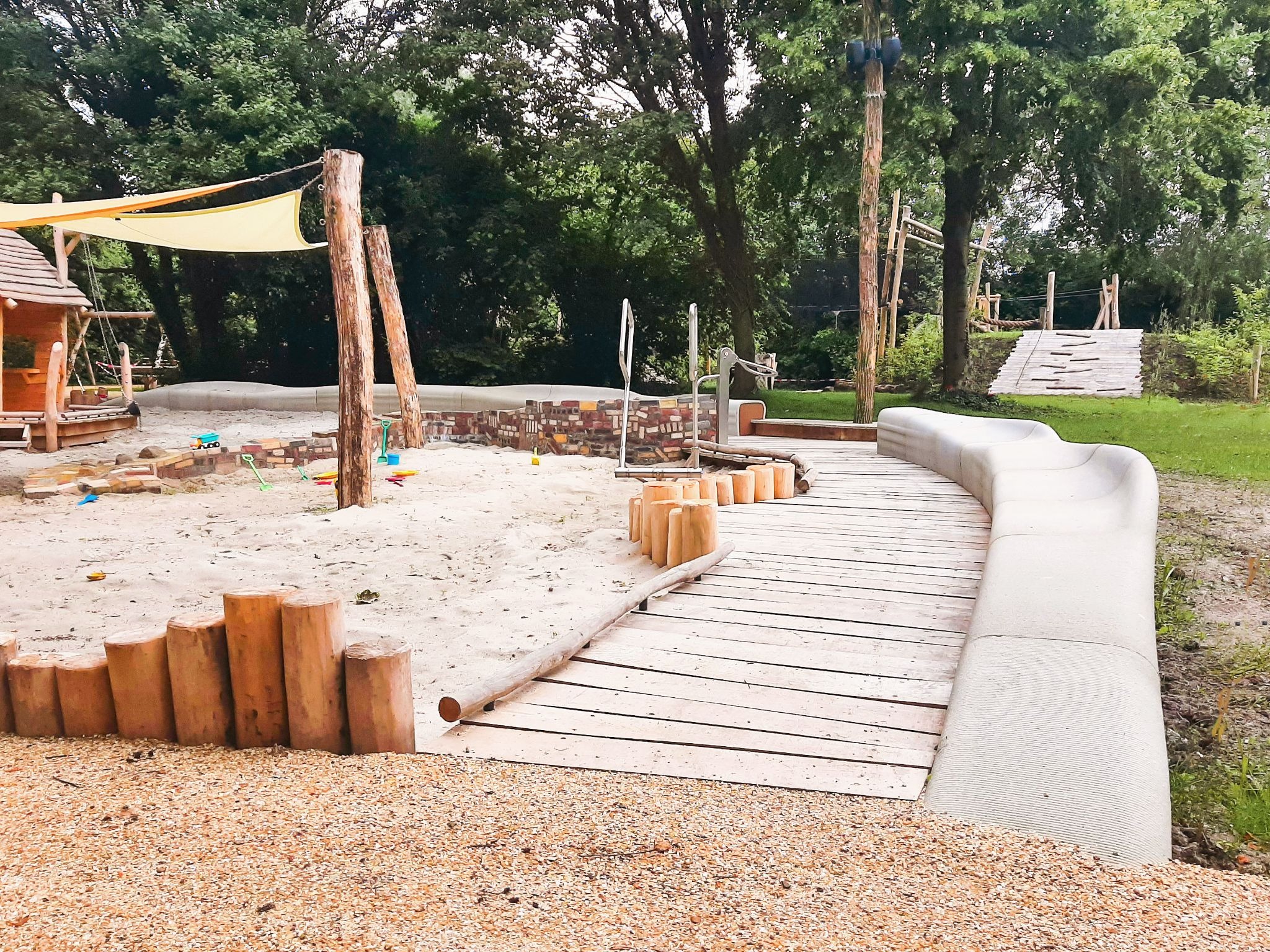
Sustainability without hand-waving
Too often, "green" is an adjective instead of an outcome. With 3D printed urban furniture, sustainability is engineered into the process.
- Material reduction. Topology-optimized shells commonly save 30 to 60% material compared with solid precast equivalents of similar performance.
- No formwork waste. Traditional casting can generate significant plywood, foam or fiberglass waste, all of which is avoided here.
- Mix tailoring. Use recycled aggregates from local demolition, design for lower cement content and specify supplementary cementitious materials.
- Lightweight logistics. Fewer truckloads, smaller cranes and quieter sites.
- Design for disassembly. Printed tenons, dovetails or post-tensioning channels make elements removable and reusable. Circularity becomes a logistics plan instead of a slogan.
For a wider look at the environmental case, see the environmental benefits of concrete 3D printing.
Smart cities need smart street furniture
The "smart" in smart cities covers intelligent physical design as well as sensors. Printed cavities accept modular sensor packs for air quality, noise and occupancy. Solar inlays can power low-energy lighting, and NFC tags connect citizens to service portals for reporting damage.
Crucially, the furniture is still furniture first: comfortable, robust and inviting. Technology is an option, not an obligation.

Cost and procurement: moving beyond the pilot trap
Early pilots can look expensive when judged like bespoke art pieces. The value shifts when cities adopt a product-platform mindset:
- Families, not one-offs. Define a catalog of parametric components that share material, mix design and anchoring. Procure the platform, not each object.
- Duration-based procurement. Contract for an annual capacity (for example, linear meters of printed elements) instead of unit costs. This stabilizes production and creates economies of scale.
- Total cost of ownership. Include shorter installation time, simpler maintenance and longer service life in the calculation. The payback often lies in fewer truck rolls and faster reopening of public space.
Safety, standards and compliance
The path from innovation to public trust runs through standards. 3DCP projects typically align with the structural and durability provisions of conventional concrete codes, with testing focused on interlayer bonding, freeze-thaw resistance and abrasion.
For furniture, which is non-structural or lightly structural, performance mock-ups and in-situ load tests validate safety. Edge radii, anti-tip geometry and visibility standards for cyclists and drivers can be parameterized so every print inherits compliance by default.
Case archetypes you can deploy tomorrow
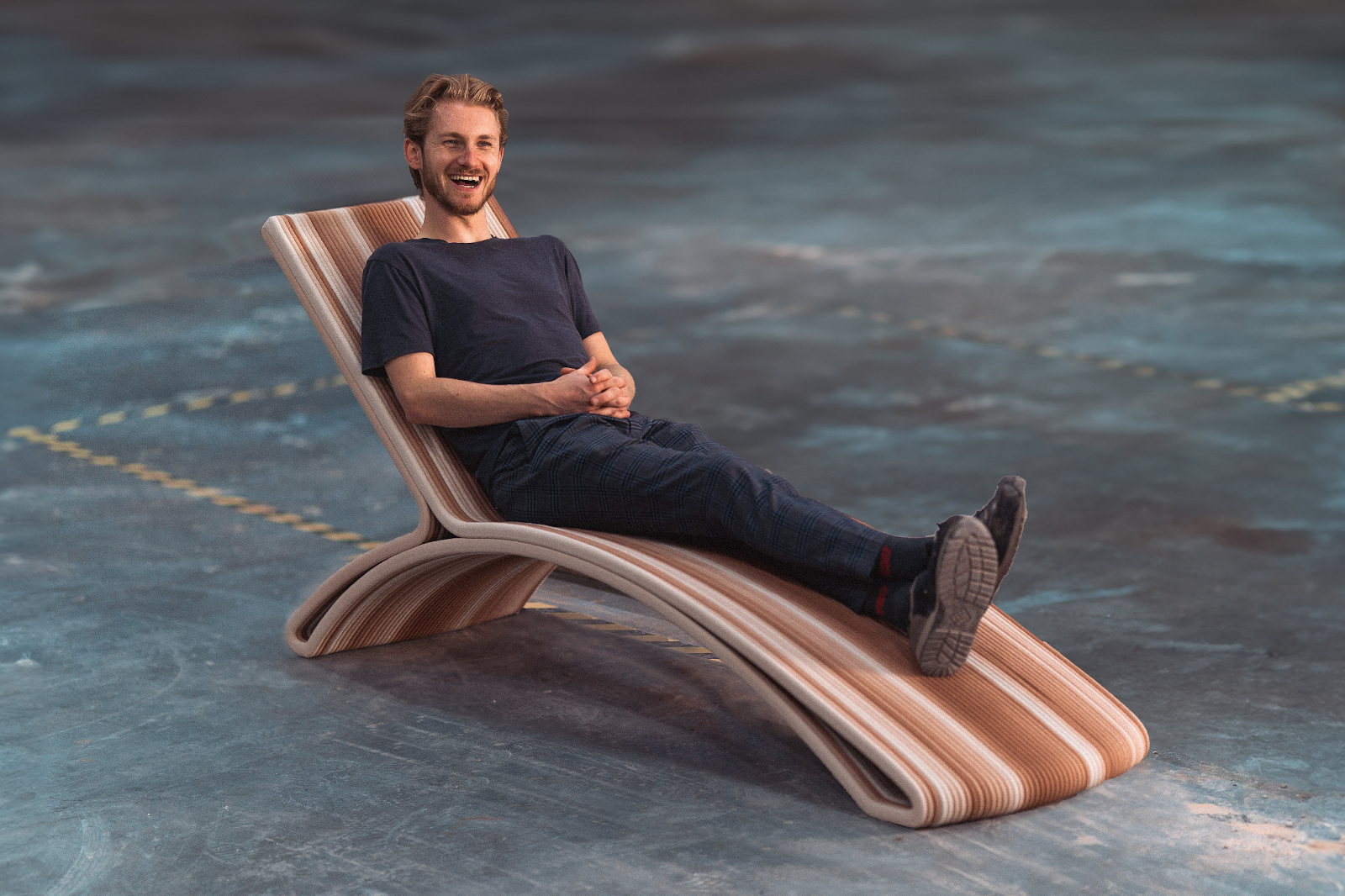
- Waterfront loungers with drainage ribs: curved shells that shed rain and resist spray, with stainless anchors and nighttime LED lines.
- Green buffers on busy corridors: planter-benches with root volume sized by streetscape data, acting as wind baffles and particulate sinks.
- Transit islands: perimeter seating with printed wayfinding, tactile edges and embedded conduits for real-time passenger information displays.
- School street modules: seating and planter combinations that calm traffic and create playable edges, installed over a weekend and evaluated over a term.
Each archetype becomes a parametric file rather than a drawing. That makes it portable across sites and cities, with local adjustments.
Looking forward: from objects to an urban operating system
The future goes beyond more printed benches. 3D printed urban furniture can become a responsive layer between citizens and city systems, part of a connected ecosystem.
Picture an urban "materials cloud" that logs composition, carbon and geometry for every printed element. End-of-life becomes a print job instead of demolition. Design tokens such as curvature, porosity and color express neighborhood identity while staying interoperable citywide. Read more about customization and sustainability in public spaces.
Printing first freed geometry from molds. The next step frees cities from static typologies. Streets will become as iterative as software: versioned, tested and improved. The furniture we touch every day will carry that progress quietly, with less material and more meaning.


%20(1).jpg)
%20(1)%20(1)%20(1)%20(1).jpg)
.jpg)
%20(2).jpg)
%20(2)%20(2).jpg)
.jpg)
.jpg)