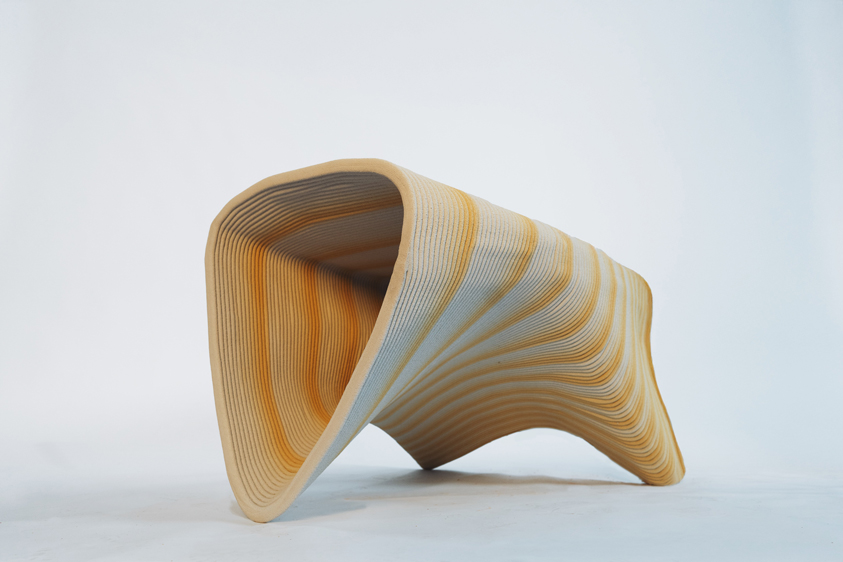
Among last year's applicants was a proposal by Prof. Giovanni Betti together with students from the German International University in Berlin (GIU Berlin). The project was not selected as one of the residency winners, but the concept stood out enough for Vertico to continue the collaboration through a shortened residency and fabrication workshop in Eindhoven.
The proposal explored a simple but ambitious question: what if architectural cladding could be integrated directly during the printing process instead of being applied afterward?
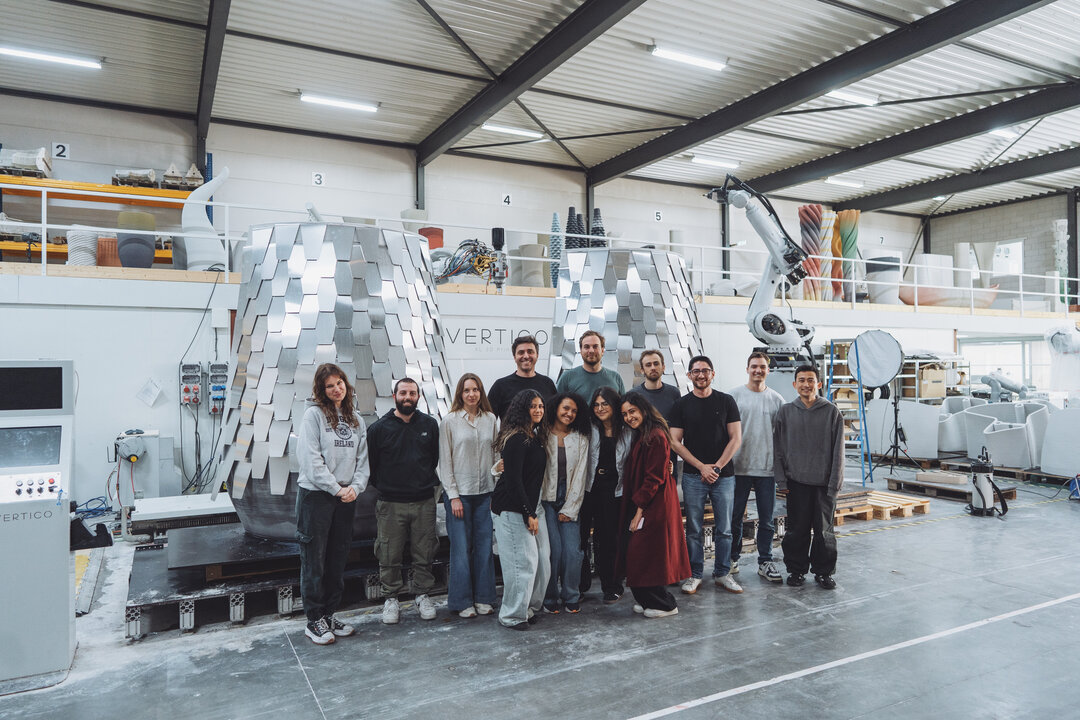
From protective layer to integrated system
The initial idea came from a common challenge in large-scale earth printing. Earthen materials allow highly expressive and sustainable forms, but structures printed this way remain vulnerable to rain and environmental exposure.
The team proposed inserting shingles directly between printed layers to create an integrated protective skin.
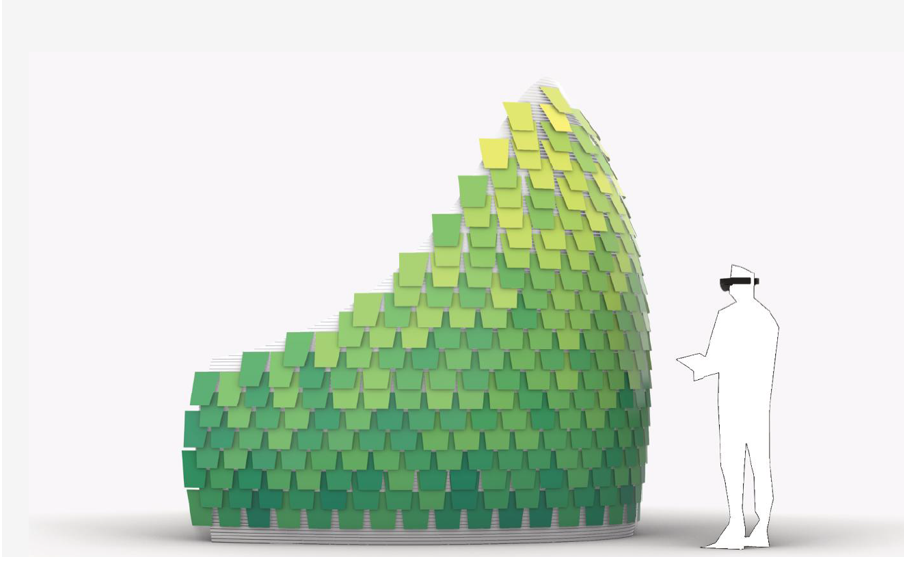
The original concept had operators wearing AR glasses to guide the precise placement of each shingle during fabrication. As the project developed, the idea evolved from a speculative workflow into a full-scale fabrication experiment.
Instead of starting with clay, the team tested the concept in concrete to better understand how a printed structure behaves when foreign materials are inserted during printing. Several questions quickly emerged:
- Would the inserted shingles strengthen the structure or weaken it?
- Could the print continue smoothly without collapsing?
- How would the concrete bond around thin metal elements?
- Could cladding become part of the fabrication logic itself?
The project gradually changed from a material experiment into a prototype for a new type of multifunctional architectural system.
Designing the dome
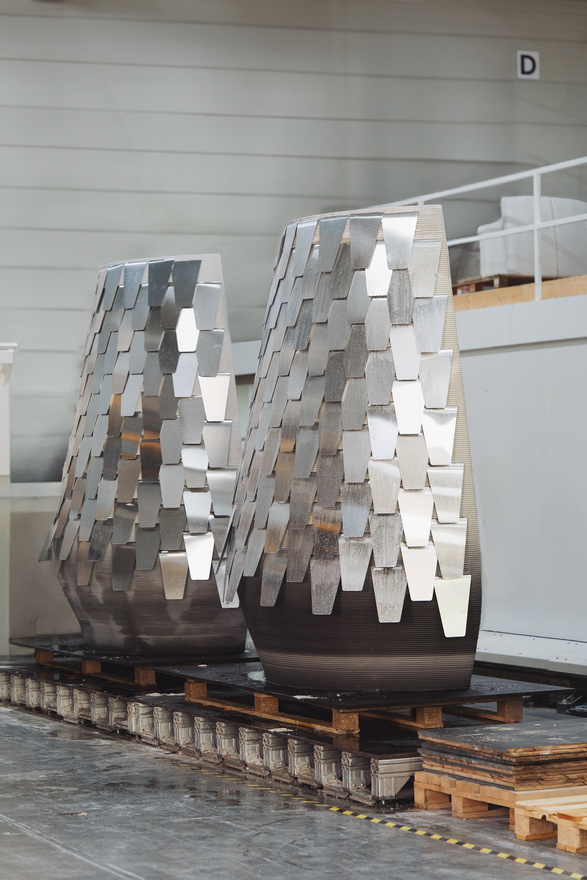
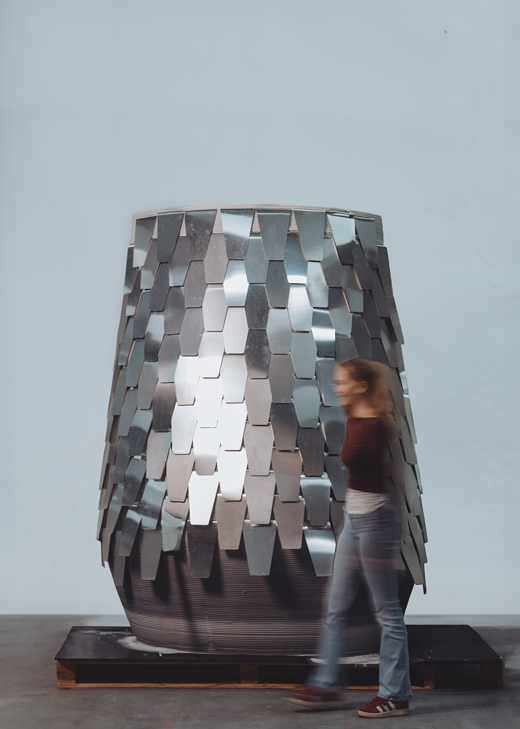
The final prototype consists of two printed dome halves that form a small pavilion with integrated seating. Together, the two elements create a semi-enclosed space for gathering, conversation and shelter.
From the outside, the reflective surface changes constantly with light conditions and viewing angle. From the inside, the geometry reveals a softer, more continuous pattern shaped by the printed layers.
The pavilion sets up an unusual dialogue between rough concrete and reflective aluminum, and between robotic precision and manual intervention.
Developing the fabrication process
One of the first practical challenges was placing the shingles during printing. AR-assisted positioning remained part of the conceptual framework, but the team eventually developed a simpler and more robust solution.
_max200kb.JPG)
Small concave markings were printed to show the exact location of each shingle. This let the team insert the pieces by hand during fabrication without additional digital guidance systems.
In parallel, the team ran multiple material tests to find which type of shingle performed best inside the printed structure. They tried aluminum and stainless steel variants, perforated and solid surfaces, and different thicknesses.
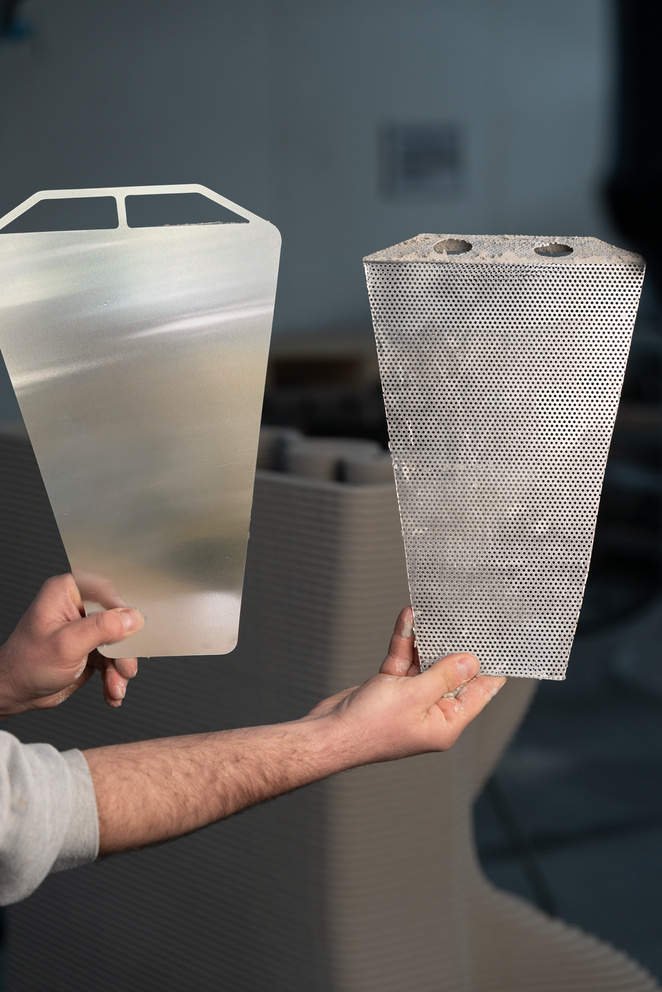
The final solution used 0.8 mm aluminum shingles with perforations on the folded section, embedded into the concrete layers. The perforations improved mechanical bonding between layers and let the fresh concrete connect through the inserted material.
Before the final fabrication, Giovanni Betti and the students also produced a series of clay studies and small-scale prototypes exploring geometry, overlap logic and material behavior.
_max200kb.jpg)
_max200kb.jpg)
A three-day fabrication workshop
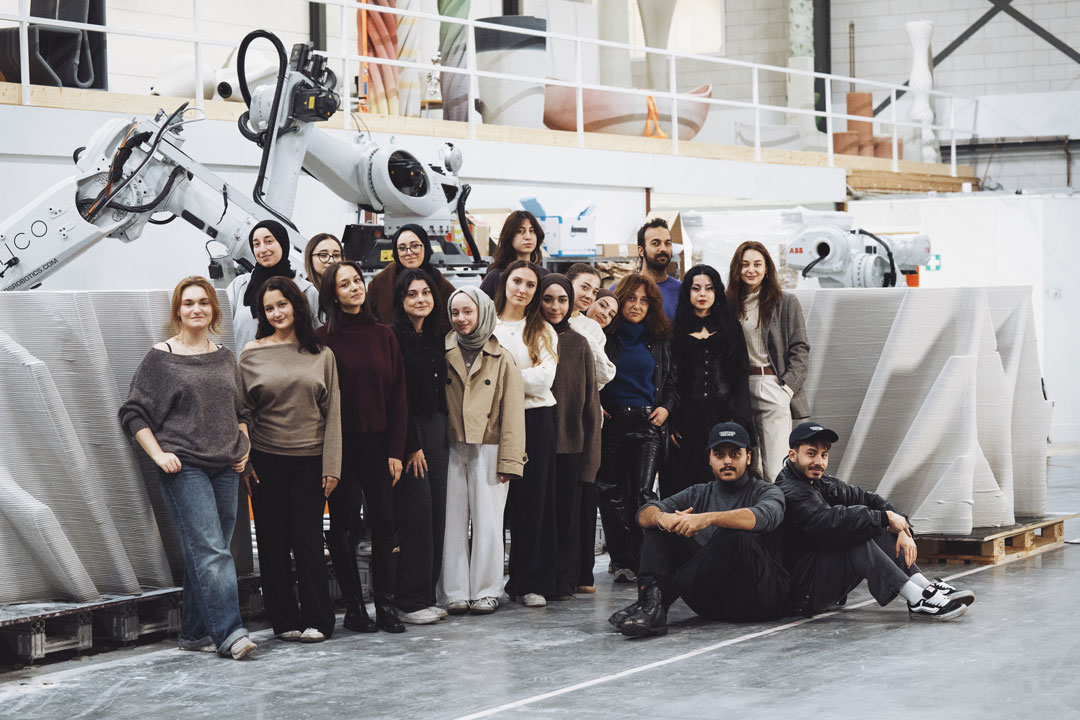
The fabrication phase took place during a three-day residency at Vertico's facility in Eindhoven.
The workshop began with an introduction to robotic concrete printing, slicing workflows in the Vertico Slicer and print preparation for large-scale fabrication. Students learned the practical realities of working with 3D concrete printing systems, from toolpath preparation to material behavior during fabrication.
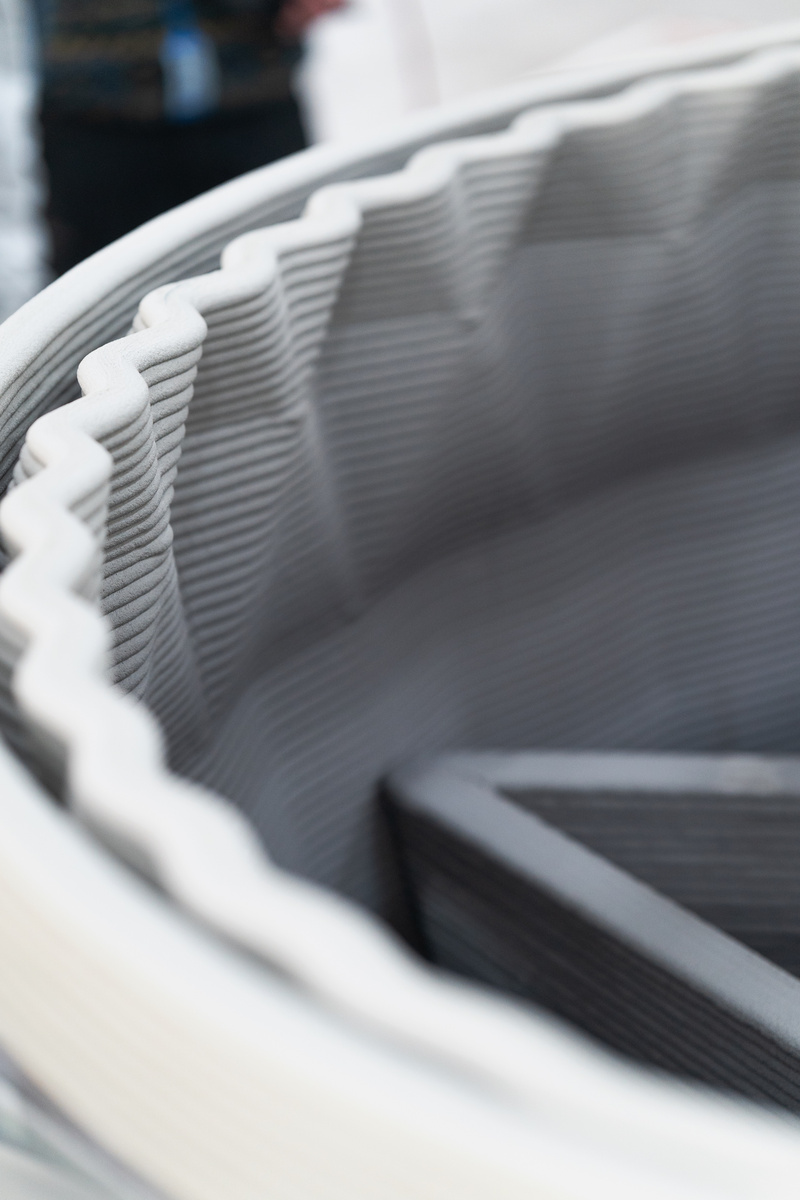
The printing itself quickly became the most intense and collaborative part of the process.
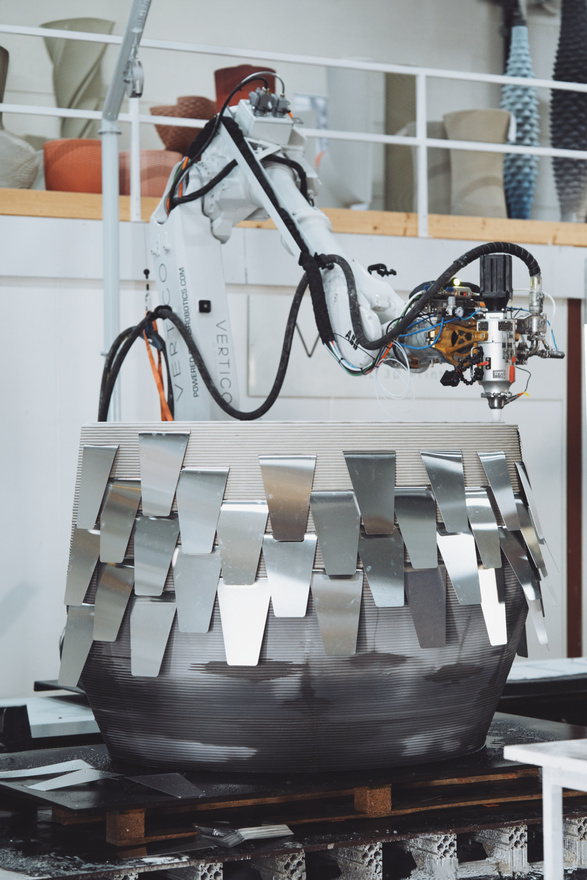
Each dome half reached 2.5 meters in height. Participants worked directly alongside the robot, carefully inserting shingles layer by layer as the structure grew.
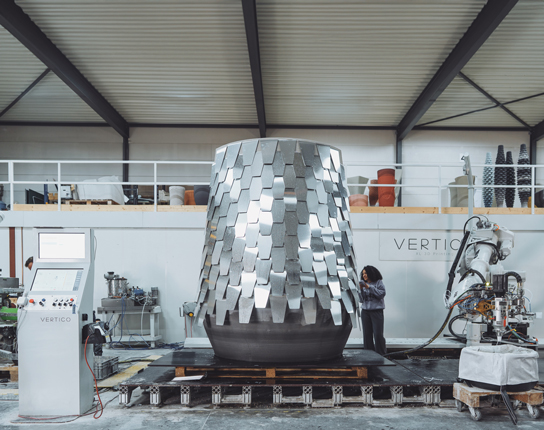
To emphasize the contrast between materials, the team used a dark concrete pigment. It amplified reflections from the aluminum shingles and added visual depth to the surface.
The process became less about producing a finished object and more about understanding how robotic fabrication, material behavior and human participation interact within one workflow.
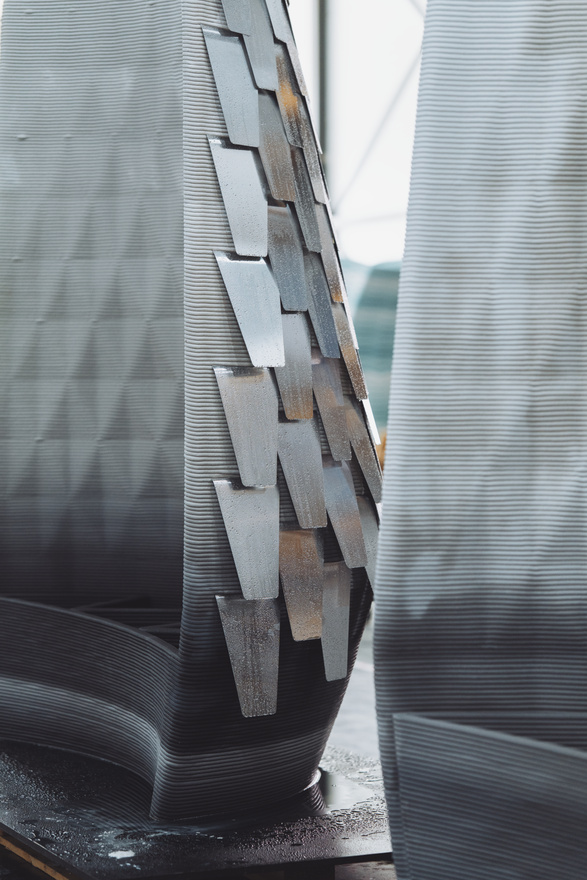
Beyond printing objects
The completed pavilion shows a new aesthetic direction for 3D printed concrete, and it goes further than that.
Instead of applying cladding as a secondary operation, the project integrates multiple architectural functions directly into fabrication. Structure, enclosure, weather protection, surface articulation and assembly begin to merge into a single continuous process.
The experiment also points to future possibilities for earth- and clay-based printing systems. Integrated protective layers may help address one of the biggest limitations of exposed printed earthen architecture.
The project also highlights the value of collaborative research settings where universities, students, designers and fabrication labs can test ideas at full scale. Read more about robotic concrete printing for education and research.
What began as a residency application became a shared research process, a fabrication workshop and a full-scale architectural prototype. It explores how robotic manufacturing can expand the relationship between material, structure and architectural skin.


%20(1).jpg)
%20(1)%20(1)%20(1)%20(1).jpg)
.jpg)
%20(2).jpg)
%20(2)%20(2).jpg)
.jpg)
.jpg)